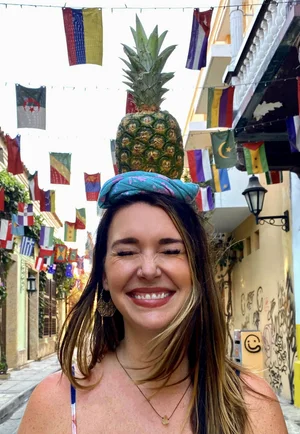
10 Things Nobody Tells You About Dating Abroad (From Someone Who's Done It in 7 Countries)
I recently sat down with Lindsey Tague, a digital nomad who's spent the last five years living across seven countries, for my podcast Type 2 Travel. Between managing her content marketing business and navigating life in Mexico, Colombia, Peru, Guatemala, and Europe, Lindsey has dated locals, dealt with language barriers, and learned some hard truths about romance across cultures.
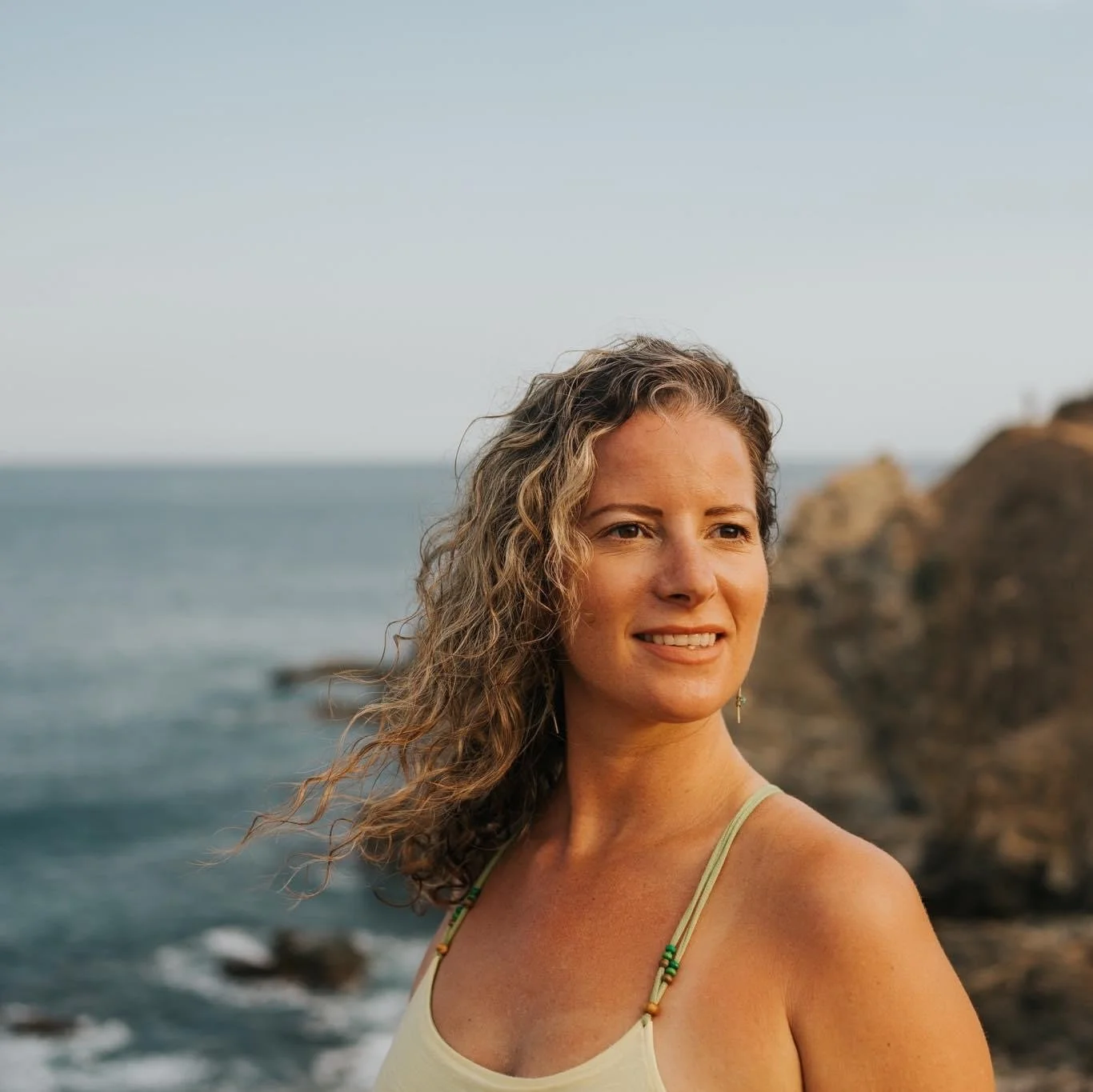
Lindsey Tague, our podcast guest on Type 2 Travel, shares her insights on the digital nomad lifestyle.
Here's what nobody warns you about before you swipe right in another country.
1. Language Barriers Don't Just Kill Conversation—They Change Who You Are
"My Spanish was better than his English," Lindsey told me about her relationship in Colombia, "and after that experience I decided I'm still open to dating foreigners, but they have to have a good level of English because you can't communicate on a deeper level if we don't speak the same language."
This obviously goes both ways, but communication is not just about understanding words. When you're communicating in a language that isn't your native tongue, you lose pieces of yourself. The quick wit, the cultural references, the wordplay, the subtle ways you express emotion—it all gets filtered through the limits of your vocabulary.
"I don't feel like I have the same personality when I'm speaking Spanish," I told Lindsey. "The humor isn't the same, the little innuendos and jokes—they just don't translate literally to another language. The conversation doesn't flow the same way in another language. I almost get lazy about having conversation because it's so mentally taxing to have to speak in Spanish all the time."
In romantic relationships, where vulnerability and authentic connection are everything, operating in your second language means you're never quite yourself.
2. Traditional Gender Roles Feel Both Refreshing and Complicated
After years away from the U.S. dating scene, Lindsey found herself drawn to the more traditional dating culture in Latin America.
"I am more drawn to that traditional kind of form of dating—the man asks me out, he pays for it, he plans it, he opens my door. I like that old-school, traditional way of dating, and I feel like that's still very common in Latin America."
But those same cultures often come with machismo attitudes. As an independent American woman running her own business and traveling solo, Lindsey found herself walking a complicated line.
"I don't know if they feel a little bit intimidated by me as an American white woman," she reflected. "They do have an allure to us, where they're very curious about us."
You can appreciate traditional courtship without accepting outdated gender expectations—but navigating that line requires constant calibration.
3. "Love Bombing" Is Real (And Family Comes Into the Picture Fast)
"Love bombing is a huge thing," Lindsey said.
In many cultures, family involvement isn't a red flag—it's just normal. People live with their parents well into adulthood, families are deeply enmeshed, and bringing someone around isn't the same level of commitment it signals in the U.S.
During our speed-round game, I asked Lindsey: "Red flag or green flag—they still live with their parents, but it's in a culture where that's normal?"
"Red flag," she said without hesitation.
I told her I'd actually encountered this in Colombia. What feels like "moving too fast" might just be normal family dynamics—but that doesn't mean you have to be comfortable with it.
4. Long-Distance Isn't Romantic When You're the One Always Leaving
"I'm single now," Lindsey told me. "I haven't had any of these dating experiences lead anywhere."
Her relationship in Colombia lasted a few months before she ended it—not just because of the language barrier, but because of "emotional tension" and poor conflict resolution skills.
When I asked her in our speed round whether she'd rather date someone long-distance who's amazing or be casual with someone local who's just "meh," she hesitated.
"Long distance couldn't be a long-term solution to that issue, so I feel like there's some nuance there. Long distance, I guess?"
Her hesitation said everything. When your entire lifestyle is built on movement and freedom, traditional relationships start to feel like constraints.
5. Cultural Concepts of Time Will Test Your Patience
"You can't pin people down at a certain time all the time," Lindsey said about Latin America. "It can be really hard to schedule things and actually expect that they're gonna happen at that specific day or time."
She told me a story about going to a restaurant, explicitly telling them she had to be somewhere and asking if they could get her food out in 45 minutes. "Yeah, yeah, yeah, come in, come in—it's fine!" they assured her.
She ended up leaving without eating because her food never came.
I've experienced this leading trips in Cuba, where "20 minutes" means one hour. I tell my travelers: multiply whatever time they tell you by three—that's Cuban time.
Time is supposedly concrete and measurable, and yet some countries treat it like a vague suggestion. Dating across that divide requires patience you didn't know you'd need.
6. You'll Learn More About Yourself Than About Dating
When I asked Lindsey about our speed-round closer—"Is dating abroad more about finding connection despite your differences, or finding yourself through the differences?"—she didn't hesitate.
"Finding yourself through the differences."
"I ultimately decided to end it," Lindsey said about her Colombian relationship. "You have to be adaptable and be patient and be willing to be a little bit flexible with those things."
Through her dating experiences abroad, she learned her boundaries. Language fluency matters. Communication matters. Being able to resolve conflict matters.
Dating abroad is a masterclass in self-awareness—whether you end up in a relationship or not.
7. Navigating Machismo and Being an Independent American Woman
"People will say, specifically in Mexico, there's a bit of that macho attitude, that machismo, where they kind of feel like they own their women," Lindsey said. "It's interesting. I can't really put my finger on it because it's not like I'm able to ask these men their true feelings about it."
There's a particular dynamic that happens when you're an American woman dating in countries with more traditional gender roles. Men are often simultaneously curious about you and intimidated by you. "They do have an allure to us, where they're very curious about us," Lindsey observed.
I've experienced this extensively in my work leading trips around the world. It's not always overt disrespect—sometimes it's just men who've literally never worked with or answered to women before. They don't even realize they're being disrespectful because it's just how things work where they're from.
I've literally told the men I work with, "I don't know if this is how you treat women in your country, but you won't be treating me this way, and you won't be treating women in my group this way." The response is usually shock—many have genuinely never had a woman talk to them like that.
Your independence and confidence might be attractive in theory, but it can be threatening in practice. You'll have to decide how much you're willing to educate versus walking away.
8. Sometimes the Best Dates Involve No Electricity and Bucket Showers
Lindsey spent four or five days on one of the Rosario Islands off the coast of Cartagena with a guy she'd been dating for a few months. The island had no real electricity—just solar power. No running water—they bathed with collected rainwater from buckets. Meals were cooked over open fire in what's called a "dirty kitchen"—an outdoor cooking area.
"I had no idea this is how it was going to be," she laughed. "I had to have that moment with myself to say: embrace it, it's gonna be cool, we'll figure it out as the days go by."
They bought fish from a local fisherman who cooked it for them in banana leaves, the traditional way. They went boating every day and were surrounded by dolphins. They watched stunning sunsets on nearly empty beaches.
"It was a really nice experience," she reflected.
The most memorable dates won't be the ones that look good on Instagram—they'll be the ones that push you outside your comfort zone and force you to be fully present.
The Bottom Line
Dating abroad isn't always what we imagine. It's messy, complicated, often frustrating, and rarely works out the way you expect.
But here's what Lindsey wants you to know: "If this is a burning desire for you, just know that when you leap, the net's gonna appear. We can get so stuck in our mental state of 'okay, if I take this step, what's gonna happen next?' No, you can't figure that out now. Just focus on what's in front of you."
Five years ago, Lindsey bought a one-way ticket to Mexico with no plan beyond "test this out for six weeks." She's now lived in seven countries, built a thriving business, and collected more dating stories than most people accumulate in a lifetime.
Is she in a relationship? No. Does she regret any of it? Absolutely not.
"Finding yourself through the differences," she said when I asked what dating abroad is really about.
Want to hear more of Lindsey's stories? Listen to the full episode of Type 2 Travel, including the tale of the 12-hour road trip through Colombian mountains, the Airbnb window that fell out of the wall at midnight, and why language fluency became non-negotiable for her in relationships.