What to Do When Things Go Wrong on an International Trip - Real Mishaps from the Field
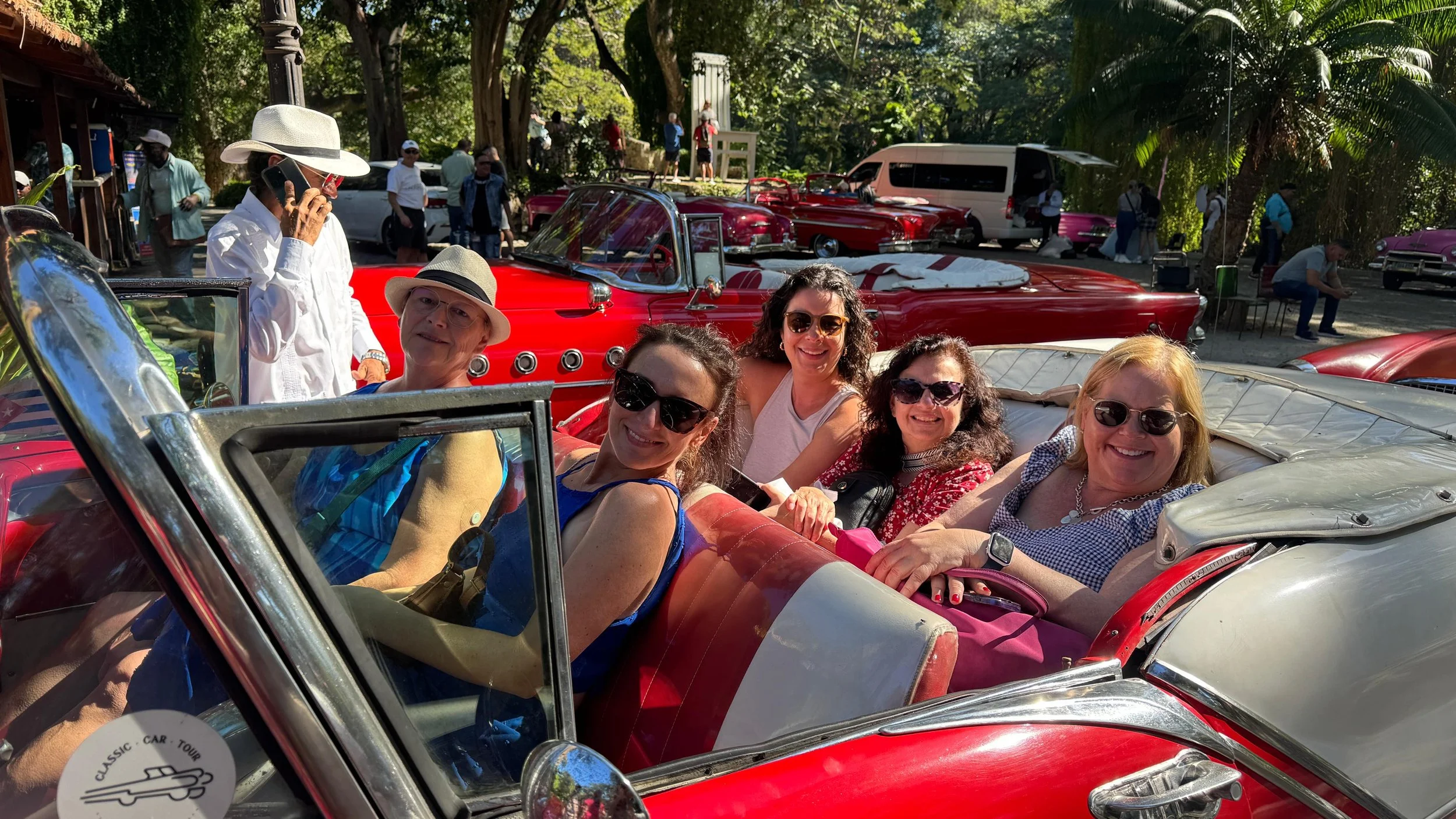
Your car broke down…now what?
Picture this…
It's pitch black on a back road in Viñales, Cuba. The classic car just broke down. Two of the smallest women on the trip are pushing it down a hill while Robertico, the driver, sits behind the wheel insisting that he must steer. Another traveler is off in the woods vomiting after getting a bout of travel sickness. And the plan to get it fixed: Robertico pops the hood, blows cigarette smoke onto the engine, and whacks the engine a few times. What’s crazier is it actually worked.
You’ve got no cell signal (because, well, Cuba), and you’re twenty minutes behind the rest of the group.
That’s the part of travel nobody puts in the brochure. And it's the part you'll be telling people about for the rest of your life.
The thing they don't tell you about a "perfect" trip
Here's a secret about smooth trips: nobody tells stories about them. "The flights were on time and the hotel was nice" has never once made a dinner table go quiet. The breakdowns, the food poisoning, the getting-hopelessly-lost — those are the moments that get retold for years, polished a little more each time.
Every moment that feels like a disaster while it's happening becomes the moment everyone won't stop laughing about for the rest of the week.
This is Type 2 travel in its purest form. Type 2 fun is the kind that's miserable in the moment and glorious in memory. Surface-level travel — the resort you never leave, the curated itinerary — rarely breaks down. And it rarely sticks with you either.
So consider this your field guide. Three true stories, and what they'll teach you about saying yes when your better judgment is screaming no.
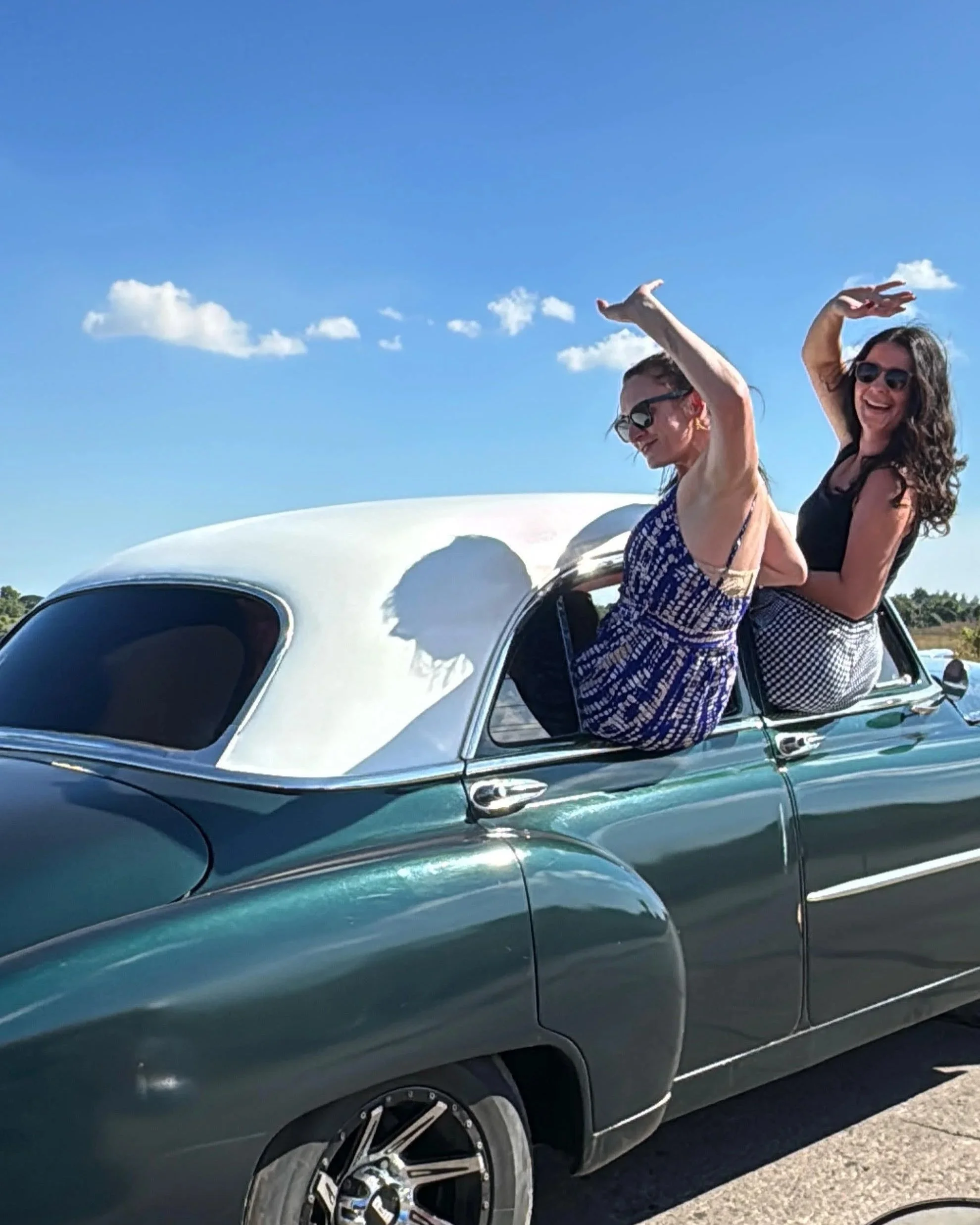
Catching a ride in Cuba
Field Report #1: The Cuban Car Disaster
We'd just left a farm-to-table dinner in Viñales. Nikki was already fading with full-on traveler's sickness and somehow she ended up in the last car. Which, of course, is the one that broke down.
What followed was the whole circus: the push down the hill, Robertico refusing to let anyone else steer claiming "no, I must steer". The cigarette-smoke-and-tree-branch repair…that was real. Nikki off in the dark having a moment with a bush…that happened too. Her best friend, Danielle, had to hand her water by flashlight so she could swish and spit in the road and climb back in.
But here's the detail you couldn't script if you tried. Afterward, Danielle got curious and looked up what kind of car it was — a '51 or '52 Chevy Deluxe. The exact type of cars that were assembled in Flint, Michigan, which is where Danielle and Nikki are from and where Danielle's grandpa worked the factories. So there's a real chance that car, breaking down on a dark Cuban road seventy years later, rolled off a line her own grandfather worked. And an even better chance she would have never looked it up had she not had that experience.
It wasn't the voodoo or the cigarette smoke that got it running again. It was the spirit of Flint.
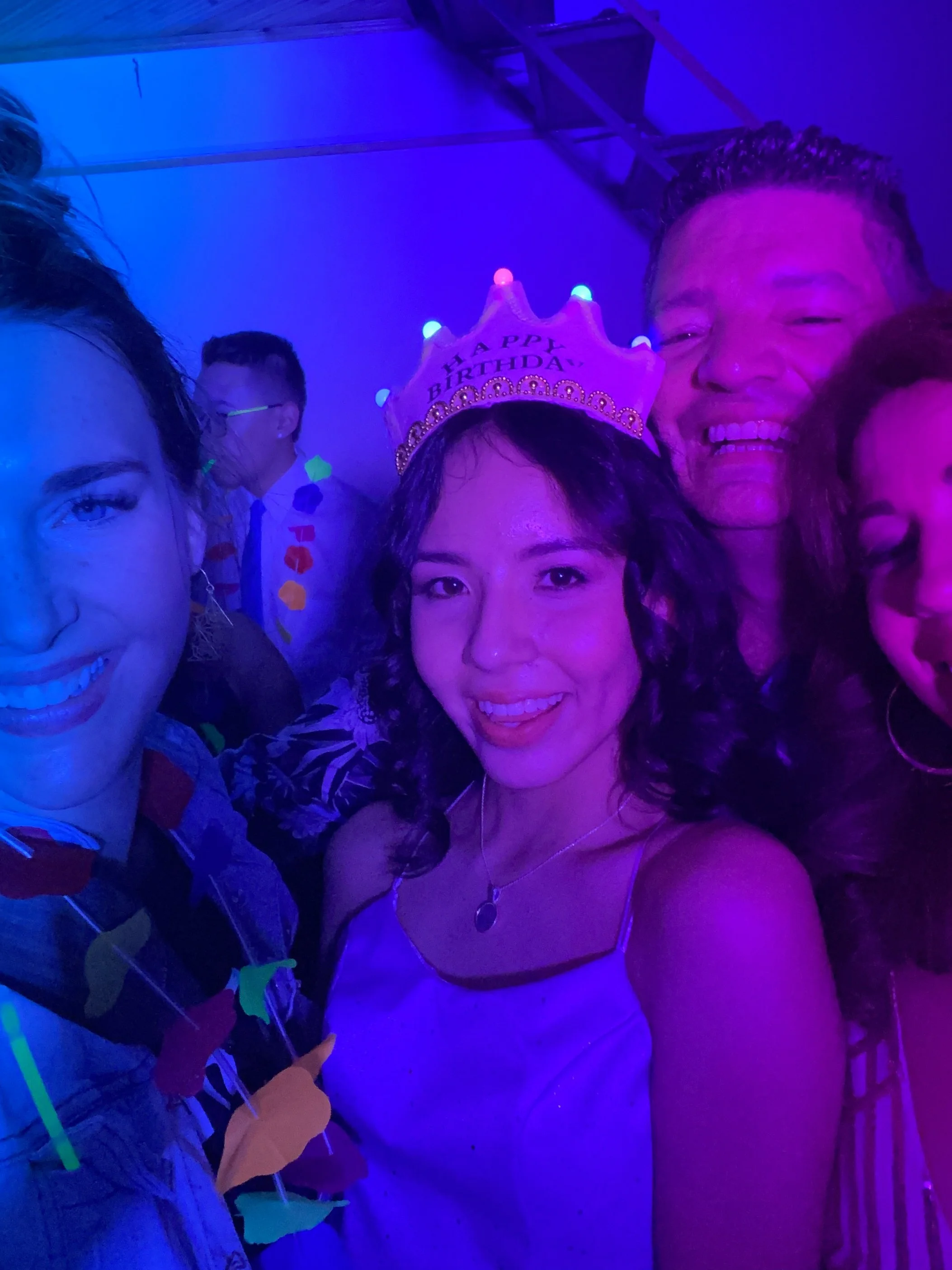
A surprise quinceañera in Columbia
Field Report #2: The Colombian Quinceañera
This one's mine, and it's still one of my favorite travel stories I have in my arsenal.
I was walking the streets alone in Bogotá, Colombia. My friend had stayed back at the room, and I was out looking for a restaurant. That's all. Just dinner. While I feel that Colombia is generally a safe country for female travelers, Bogotá is not exactly known for being the safest place to wander solo, especially at night. So when somebody called out to me from across the street and told me to come over, every piece of conventional wisdom said keep walking.
But what did I do? I went over.
Two Colombian women asked if I was alone, what I was doing wandering around by myself, and then — naturally — invited me inside. Again, every alarm bell. But I assessed the situation, thought “what could possibly go wrong?”, peeked in, didn't see anything alarming, and decided to go for it.
I went upstairs and stumbled into a Colombian quinceañera. About thirty families, mid-celebration, and suddenly there I was, the lone gringa standing in the doorway. They had found their token American off the street and they could not have been more thrilled about it. The grandma fed me. The dad poured me whiskey. They paraded me around like an honored guest they'd been expecting all along.
To this day I think about the fact that if I had said no—if I had listened to the very sensible voice telling me to keep walking—I would never have had that night. It would simply not exist.
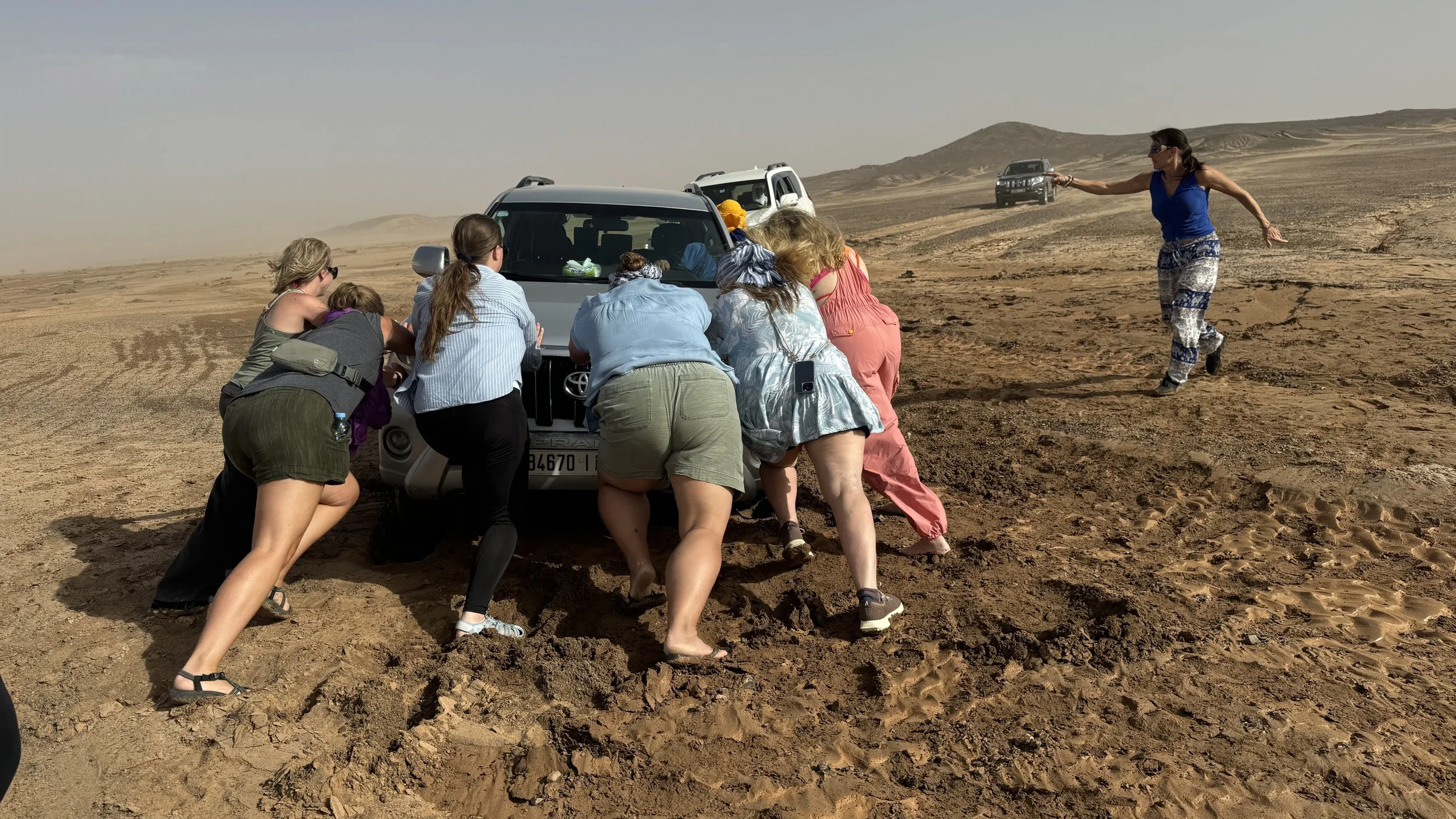
Our crew doing the Lord’s work out in the middle of the Sahara
Field Report #2: The Moroccan Mud
Different trip, different country, same lesson.
We were deep in the Sahara, and the desert had decided to do something it rarely does: it stormed. Hard. The kind of storm that causes actual flooding in a place that is, by definition, a desert. We'd been out for the day and were heading back to camp when one of our 4×4 vehicles got stuck…buried-to-the-axles, this-isn't-going-anywhere stuck.
The drivers — several of them — piled out and started trying to push. They pushed, they strategized, they pushed again. Nothing. Just spinning tires and flying mud.
I'll be honest: for about thirty seconds the group travel tour operator in me had a small internal moment. Twelve women. The middle of the Sahara. No water. Hot sun. Are we about to be the cautionary tale? That kind of thought.
Then the women decided to take matters into their own hands.
Dorenda — five foot nothing, Hollywood stunt double, the kind of person who looks like she could not possibly move a four-by-four but absolutely can — started barking orders like a drill sergeant. The women got into position. They pushed. And that vehicle that four grown men could not budge came out of the mud.
We were covered head to toe in Saharan mud, laughing so hard we couldn't breathe. Some of the best photos I have are from that moment — twelve women, filthy and triumphant, next to a four-by-four that had no business being free.
The recurring lesson of international travel, apparently: just put a woman in charge.
And the desert wasn't done having its fun with us just yet. That same night, a sandstorm rolled in — my first one in Morocco after eight trips of waiting for one. It canceled our camel ride, which everyone was a bit bummed about, but standing in the middle of a real Saharan sandstorm was its own kind of unforgettable.
Sometimes you don't get the experience you booked. You get the one the desert wants to give you.
The actual field guide (the useful part)
Saying yes to the chaos doesn't mean being reckless. It means being prepared enough that the mishaps stay funny instead of becoming actual problems. So, the genuinely practical version:
Carry your own toilet paper and water. Always. In a lot of places you'll pay or tip for toilet paper, and it will be unavailable exactly when you don't expect it. Water and TP are non-negotiables in my bag. My go to: Wipe That Tush
Don't count on cell signal. The Cuba car had none. Know your group's check-in plan before you need it, and assume there will be a stretch where nobody can reach you.
And always plan ahead with an eSIM before you leave home. I use GigSky around the world (yes, even in Cuba), and you can get 10% off your first data purchase with code LAURAE10.
Pack a small chaos kit. Water, basic meds for traveler's sickness, a portable battery pack, a headlamp, a few snacks. The difference between a great story and a miserable night is usually one of these four things.
Travel with people who stay calm. Tranquilo is genuinely a survival skill. The person who panics makes everything worse; the person who shrugs and says "we'll figure it out" is the one you want in the broken-down car.
Trust your gut — but know the difference between danger and discomfort. This is the real one. Crashing a quinceañera in Bogotá wasn't reckless because I'd taken a beat to read the situation. "No" is the right answer plenty of times. But a lot of the moments we say no to aren't actually dangerous — they're just unfamiliar. Learn to tell those apart, and a whole world opens up.
Why this is the whole point
Every great travel story I have lives in this exact territory. The moment things went sideways, or the moment I said yes when the safe answer was no. The breakdowns are where the bonding happens. The detours are where you meet the grandma who feeds you whiskey. The discomfort is the doorway.
You will not remember the trip where everything went according to plan. You'll remember the night the car died and a stranger's family adopted you for a few hours.
That's the whole point. That's Type 2 travel.
Want to hear more of Danielle and Nikki’s Cuba trip? Listen to the entire episode — available on Apple, Spotify, and wherever you get your podcasts.
Ready for some Type 2 Travel yourself? Choose your own adventure below. 👇🏻