How We're Bringing Period Care to 260 Girls in Kenya
Last year, I took my first scouting trip to Kenya. We visited a rural school, and I did what any well-meaning traveler would do—I stopped at a store along the way and bought school supplies. Notebooks, pencils, crayons—the essentials.
Or so I thought.
After we distributed everything at the school, I pulled the teacher aside and asked what else they needed for next time. More supplies? Books? Art materials?
She looked at me and said, simply: "Sanitary pads."
I'll be honest—I was embarrassed that I hadn't thought of it. But more than that, I was shocked when she explained why.
Girls at her school were missing 3-7 days every single month because they didn't have period products. Some were falling so far behind they were dropping out entirely. Others were using scraps of fabric, or nothing at all, and dealing with the shame, discomfort, and health risks that came with it.
Their futures were shrinking because of something as basic as a period.
I left Kenya knowing I had to do something. I just didn't know what yet.
The Problem: Period Poverty is Bigger Than You Think
Here's what I've learned since that conversation: 500 million women and girls worldwide lack access to adequate menstrual products and facilities.
That's not a typo. Half a billion.
In East Africa specifically, girls lose an average of 4-5 days of school per month during menstruation. Over the course of a year, that's nearly 2 months of missed education. By the time they reach high school, many have fallen so far behind—or faced so much stigma and shame—that they drop out completely.
It's about dignity—bleeding through clothes, being teased by classmates, and feeling unclean.
It's about health—using unsanitary materials that cause infections, rashes, and worse.
It's about safety, because girls who can't go to school are more vulnerable to early marriage, gender-based violence, and exploitation.
And it's about economics, because without education, their future earning potential disappears
Here's what really got me: only 39% of schools globally provide menstrual health education. Many of these girls get their first period with no idea what's happening to them. Imagine being 12 years old, suddenly bleeding, in pain, and thinking you're dying because no one ever told you this was normal.
The cultural stigma makes it even worse. In some communities, girls are considered "unclean" during their periods and are isolated from their families. Many can't even talk to their parents about it.
So what are they using? Scraps of fabric. Pieces of mattress foam. Newspaper. In some cases, literally nothing.
When I started planning our March 2026 Kenya trips, I knew we had to address this. But I didn't want to show up with a van full of disposable pads and call it a day.
I wanted to do this right.
The Solution: Reusable Pads That Last 10 Years
Enter Abby Hay, founder of Nora Period Care and the Soul Purpose Foundation.
I first met Abby after posting a clip from a previous podcast episode where I mentioned period poverty in Kenya. A mutual friend reached out offering to connect us, and as soon as we started talking, I knew we had to partner on this.
Here's what makes Nora different. Their pads are reusable and built to last up to 10 years with proper care. That means one $10 donation provides a decade of reliable period care.
Not one month. Not one year. A decade.
They're ethically manufactured in Malawi. Abby just got back from there, where she met with Grace Pads—the team that manufactures Nora's products. This isn't some factory churning out cheap products. It's a partnership that creates jobs for women in one of the most economically disadvantaged countries in the world.
The pads are designed for the reality these girls face. Each one has a waterproof outer layer, super-absorbent microfiber inside, and a soft honeycomb layer against the skin. They snap into underwear, which is why underwear is included in each kit—some girls don’t even have that. They rinse clean without staining, dry quickly, and are PFAS-free and chemical-free.
And this is the crucial part—they come with education. When we distribute these kits in March, we're not just handing them out and leaving. We'll be teaching the girls how to use them, how to wash them properly, and breaking down the stigma around menstruation.
I was skeptical at first. So I tested them myself during my last cycle. And the verdict? They're great. Comfortable, effective, and I'd absolutely recommend them to anyone looking to save on cost and save the environment—which is exactly why I feel good about bringing them to Kenya.
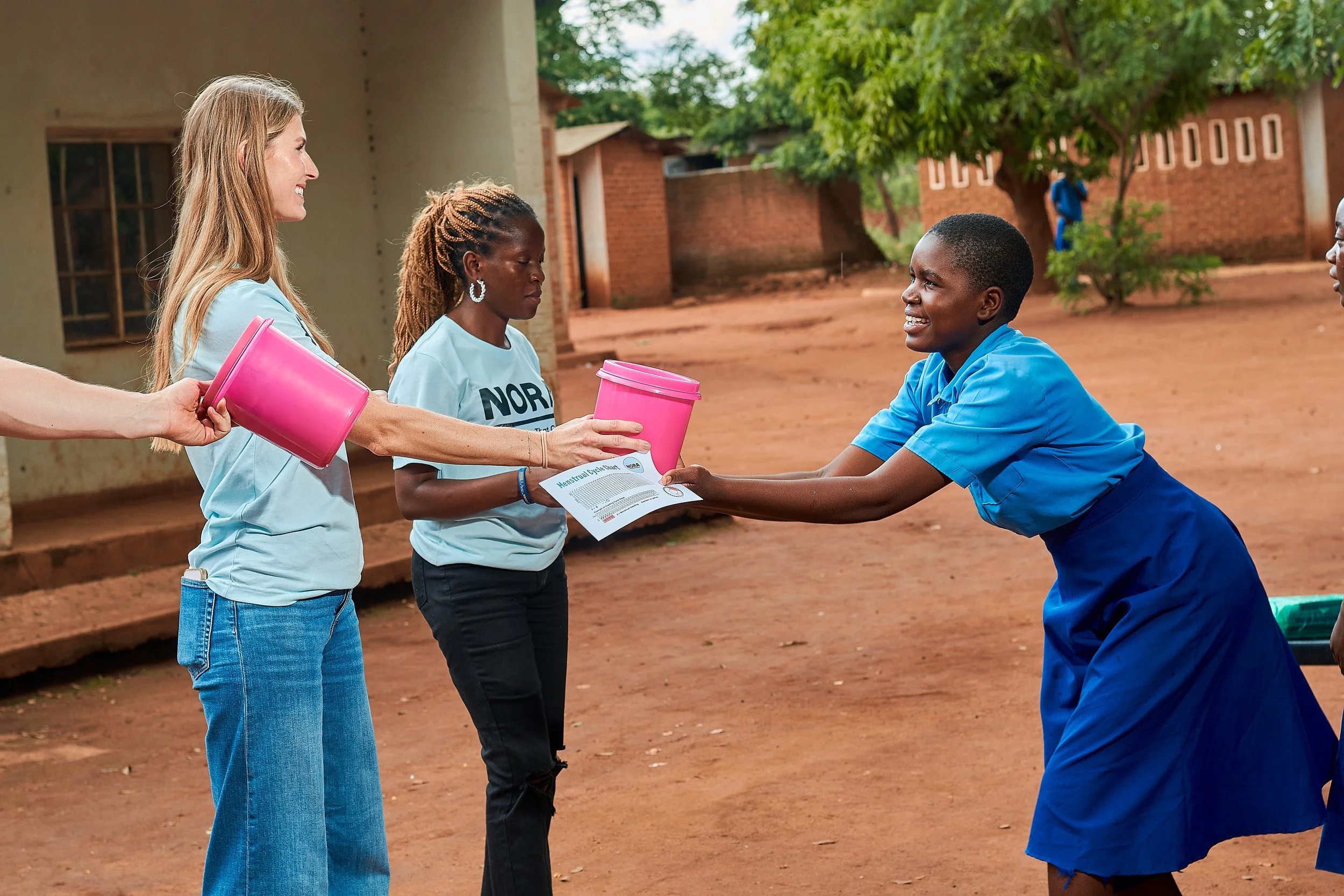
Abby distributing kits on her recent trip to Malawi.
What's in Each Kit
For just $10, each girl receives four Nora reusable pads that last up to 10 years, one carrying pouch that stores one clean pad and one used pad, one bar of laundry soap for washing the pads, one pair of underwear (since many girls don't have any), and a small bucket that can be used for transporting water, cleaning the pads, and storage for the rest of the kit when they aren’t menustrating.
That's it. $10. The price of lunch.
And here's what shocked me when Abby told me about her recent distribution in Malawi: the girls cheered loudest for the soap. Not the pads. The soap.
Because they don't have it.
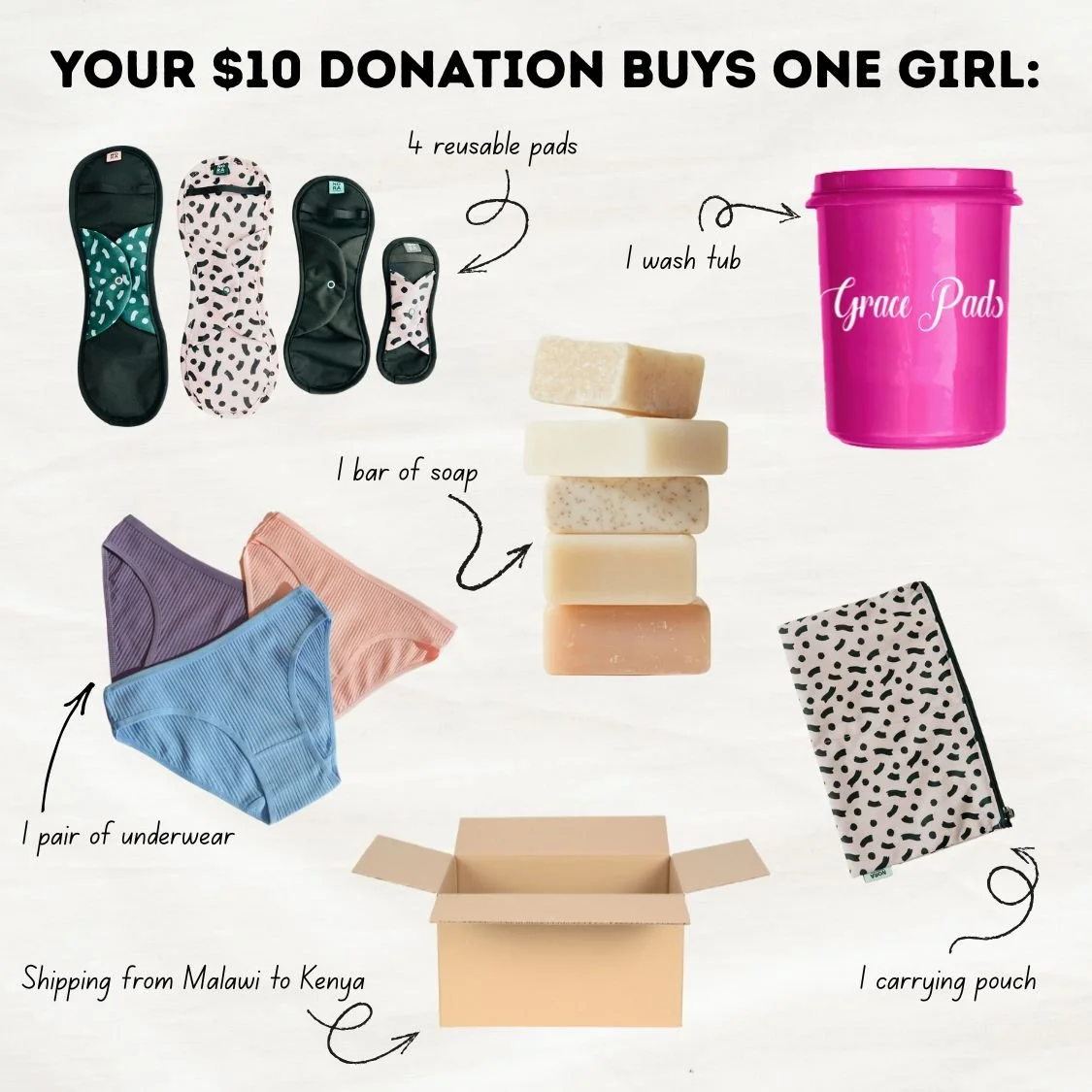
Everything your $10 donation gets one girl in Kenya.
The Impact: This is About So Much More Than Pads
When a girl has reliable period care, everything changes.
She doesn't miss school. She doesn't fall behind. She doesn't drop out. She finishes her education. She gets a job. She supports her family. She breaks the cycle of poverty.
Educated women earn more, marry later, have healthier children, and invest back into their communities.
So yes, we're bringing pads to Kenya. But really, we're investing in these girls' futures. And because these pads last 10 years, this isn't a one-time fix.
Here's What Happens Next
Between now and March 2026, we're fundraising to sponsor all 260 girls at the school we're visiting. Abby's team in Malawi is making the pads by hand, while I'm ordering soap and underwear locally in Kenya. My Kenya partner, James, already took a special trip to Malawi (bless him 🫶🏻) and loaded up his truck with 260 buckets for the girls. Both of my Kenya groups will help assemble and distribute the kits to the girls.
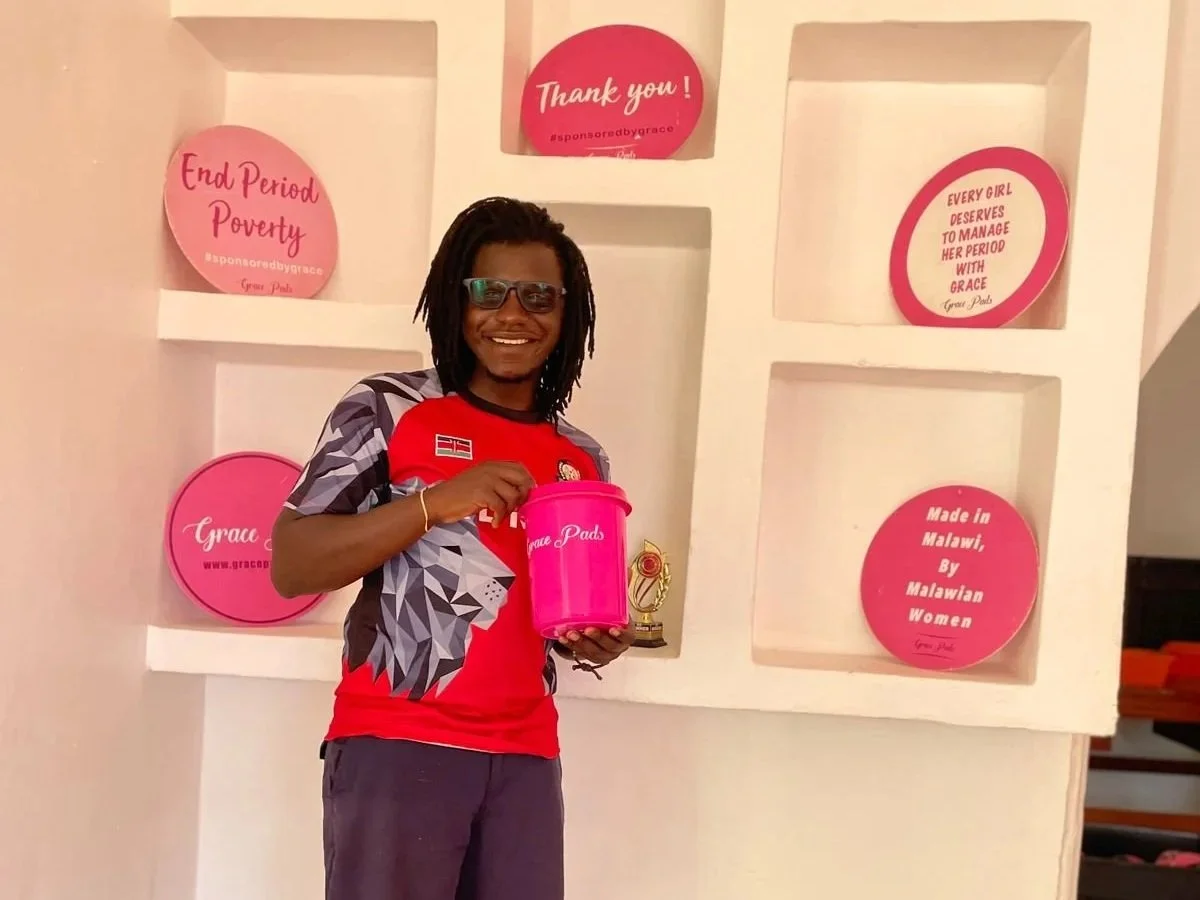
James visiting the Grace Pads headquarters in Malawi to pick up our buckets.
In March, we'll visit the school with both groups. We'll teach the girls about menstruation, how to use the pads, and how to care for them. We'll distribute the kits and spend time with the girls. And I'll document the experience and give updates so our sponsors can see exactly where their donation went.
After March, I'll share photos, videos, and stories from the distribution. We'll follow up with the school to track the impact. And this won't be our last trip to Kenya.
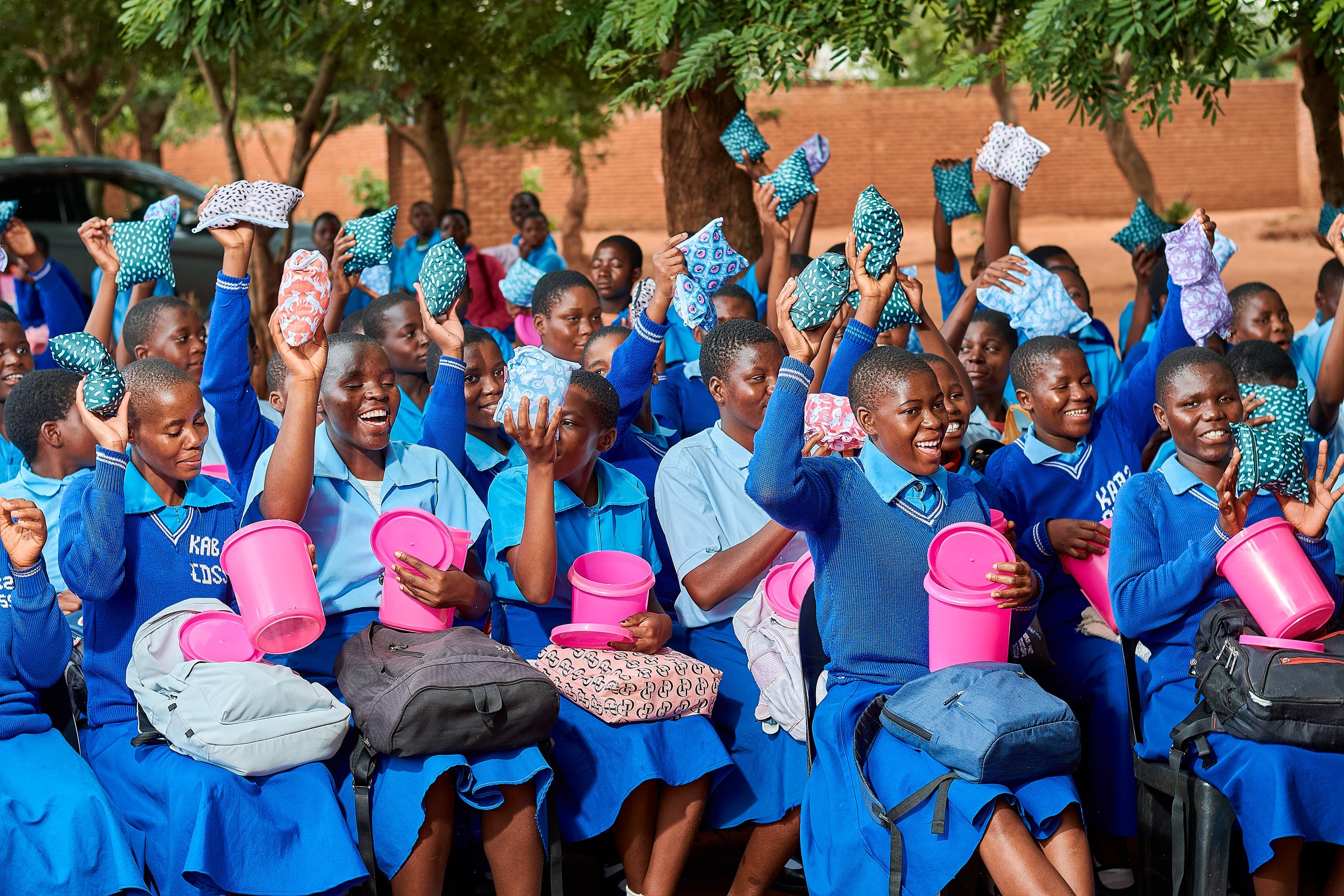
A group of excited girls in Malawi after getting their new kits
How You Can Help
Our goal is to raise $2,600 to sponsor all 260 girls. You can sponsor one girl for $10, five girls for $50, ten girls for $100, or 26 girls for $260. Sponsor one, or sponsor them all. Every kit donated makes a huge difference in the quality of life of the girl you sponsor.
Every dollar goes directly to purchasing supplies through Abby's nonprofit, Soul Purpose Foundation. No overhead. No administrative fees. Just pads, soap, underwear, buckets, and shipping.
Share This
Not everyone can donate right now. But you probably know someone who can or who'd want to know about this project. Share this post. Forward it to a friend. Post it in your Facebook group. The more people who know, the more girls we help. And remember, $10 might not feel like much, but that donation makes a huge difference in the life of one girl.
Buy Nora Pads
If you use pads, consider switching to Nora. They're chemical-free, dye-free, better for the environment, and 100% of profits go directly to distributing pads internationally.
Listen to the Full Story
I sat down with Abby for the latest episode of Type 2 Travel to dig into what period poverty actually looks like on the ground, her recent trip to Malawi, why understanding local culture matters before trying to help, and how ethical manufacturing transforms communities.
Listen to the podcast episode here >>>
Join Us in Kenya
We still have spots on Kenya Group 2 (Women Only) departing March 25, 2026. You'd be part of this distribution, plus we're doing a 10-day safari and cultural immersion experience.
Learn more about the Kenya trip
Why This Matters to Me
I've built my business around one belief: travel should leave a place better than we found it.
Not in a performative, white-savior way. But in a real, sustainable, community-driven way that honors the people we're visiting and actually makes a difference.
This project addresses a real need that the community identified. It's ethically sourced and manufactured. It creates jobs. It keeps girls in school and changes their futures. And it's accessible for people who want to give back.
For the price of a fancy coffee, you can give a girl in Kenya 10 years of dignity, education, and opportunity.
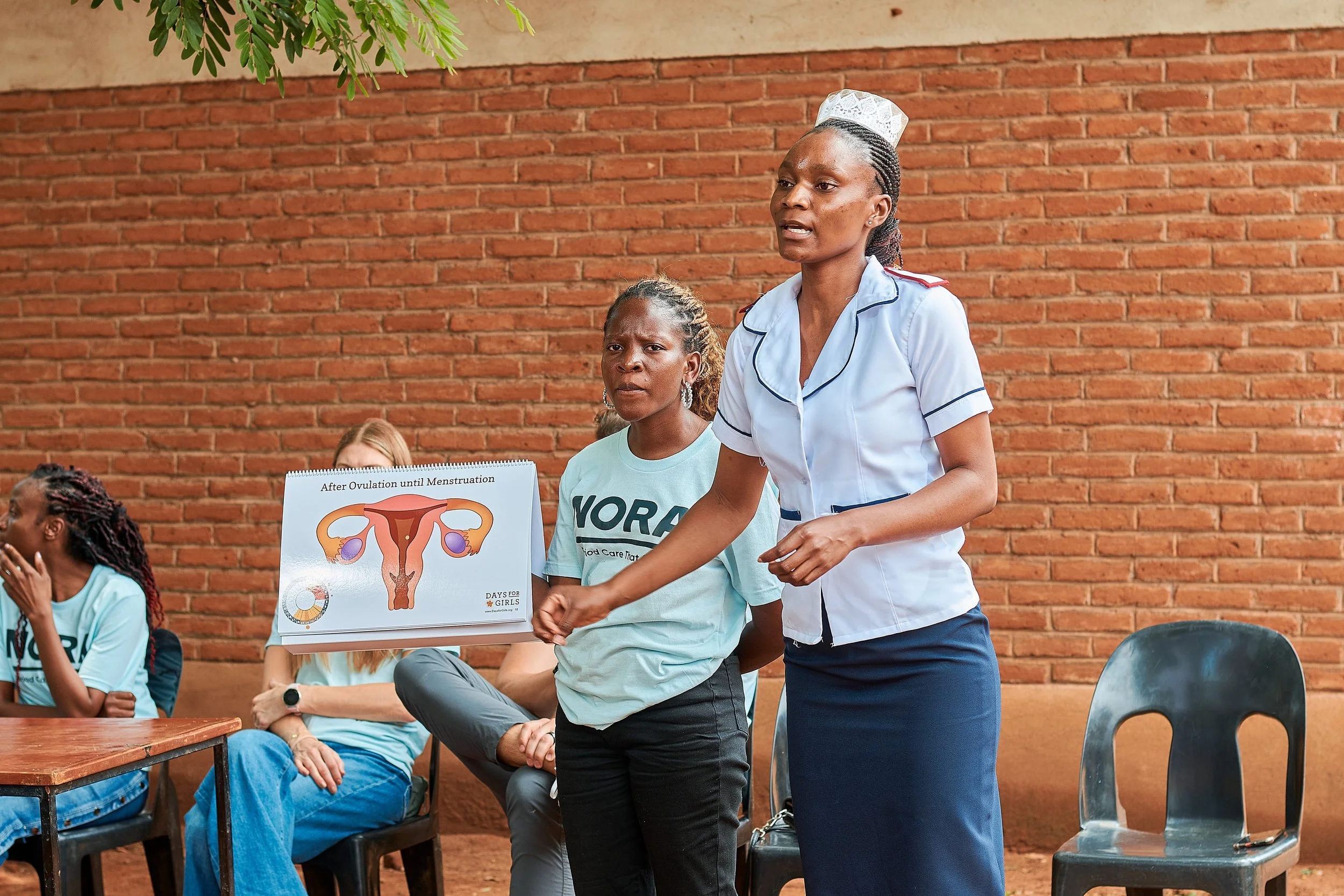
Nora doesn’t stop at just donating kits, they provide school-aged girls with menstruation education as well.
Frequently Asked Questions
Why Kenya specifically?
Because that's where my groups are going, and I have a direct connection to a school that needs our help. It's also where I first learned about this issue. If this project goes well, we'll expand to other countries where we travel.
Why reusable pads instead of disposable?
Disposable pads would last a few months at most. Reusable pads last 10 years. It's more sustainable, more economical, and better for the environment. Plus, in many rural areas, there's no reliable way to purchase disposable pads regularly, so it’s a bandaid solution that doesn’t actually solve a problem long term.
What if the girls don't have access to clean water to wash them?
The pads rinse out easily with minimal water, and we're including soap in each kit. The school we're visiting does have access to clean water, and the buckets can be used to transport water from school to home.
Why not tampons or menstrual cups?
Culturally, in most of East Africa, internal products aren't used or accepted. Pads are what girls and women prefer and feel comfortable with. We're providing what they actually need and want.
How do I know my money is actually going to the girls?
Your donation goes through Abby's registered nonprofit, Soul Purpose Foundation. I'll be assembling the kits in Kenya and personally distributing them with my groups in March. You'll see photos, videos, and stories of exactly where your money went. Full transparency.
Can I donate pads I already have?
Unfortunately, no—transporting pads internationally isn't practical, and we need to ensure quality and consistency. The $10 covers everything in the kit, not just the pads. If you are coming on the trip, you can bring unopened disposable pads with you if you have them, but the best option is donating money to create the reusable kits.
What if you raise more than $2,600?
Any extra funds will go toward purchasing extra soap and underwear, expanding the project to more schools in Kenya, or future distributions in other countries where we travel.
Can I come on the trip and help distribute?
Yes! We have spots left on Kenya Group 2 (Women Only), March 25 - April 4, 2026. You'd be part of this distribution plus a 10-day safari and cultural experience.
Let's Do This
260 girls. $2,600. 10 years of impact per girl.
Thank you for being part of this community. Thank you for caring. And thank you for showing up.