
What's Really Happening in Cuba Right Now
I've been getting a lot of questions about Cuba lately — what's happening there, whether it's safe to travel, and what the situation actually looks like on the ground.
For context, I'm a tour operator based in the United States who has been taking groups to Cuba for years. I was there in January with two back-to-back trips, and I've spent enough time on the island to have many people I care about there.
I'm not writing this as some sanitized tourism pitch or to weigh in on the politics of the Cuban oil crisis.
I'm not an expert on all things Cuba. I'm not Cuban, I don't live in Cuba, and I'm certainly not the mouthpiece of the Cuban people.
What I can share is what I experienced in January, and more importantly (and the actual reason I'm writing this), what my Cuban tour guide and friend, Andrés, lived through in his final weeks before leaving the island for the first time in his 38 years.
Andrés just got out on what turned out to be one of the last regular international flights before the oil crisis took a turn and grounded much of the country's air travel. He's safe in Spain now, and a few days ago he walked me through what those final days looked like — not as someone analyzing from the outside, but as someone who packed his life in the dark and left everything behind.
This is his story.
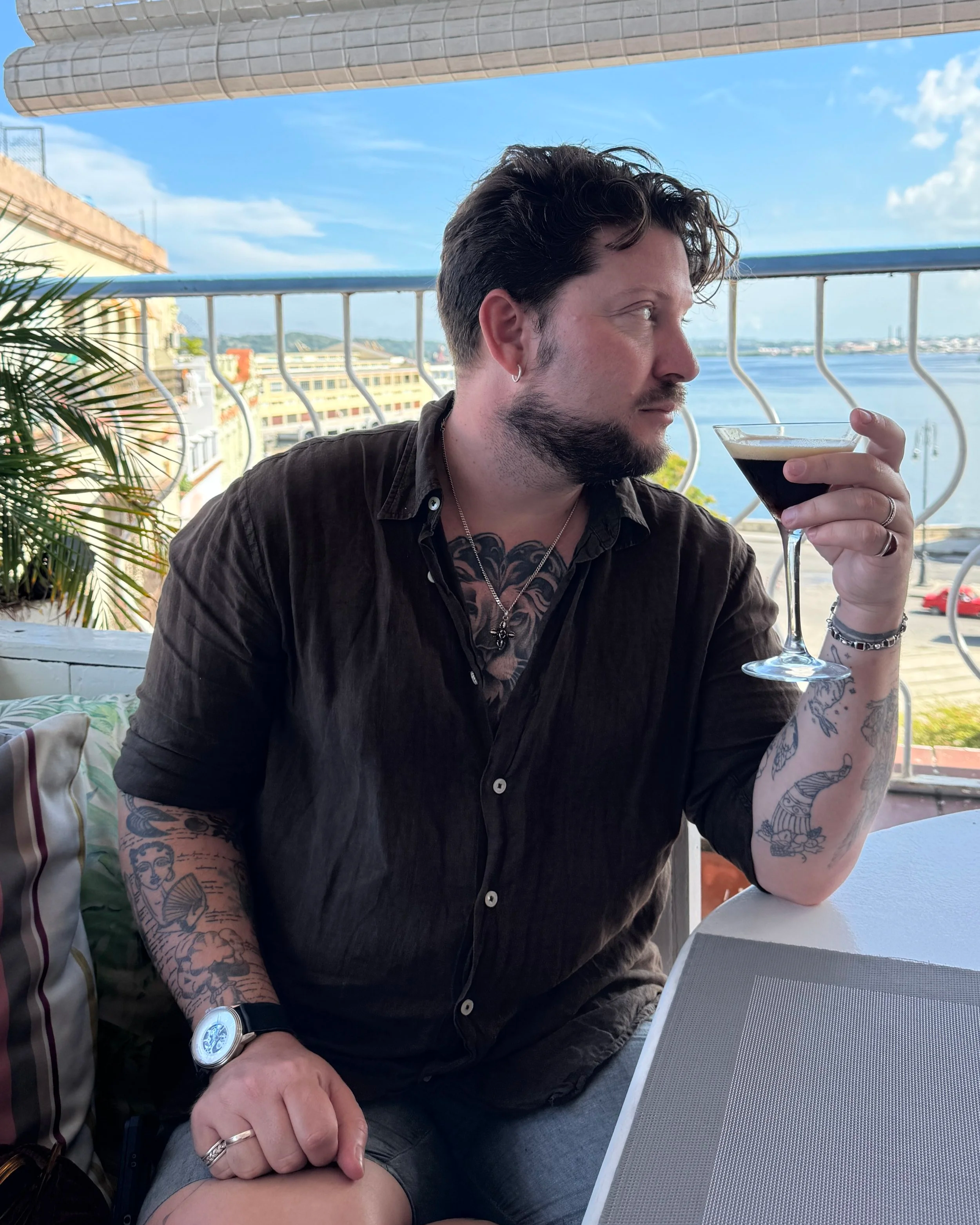
Andrés on my last day in Havana, January 11, 2026
What I Witnessed in January 2026
I arrived in Cuba at the end of December, just before the U.S.-Venezuela conflict was starting to unfold. The first week felt like what had become normal for Cuba in recent years — intermittent power outages, slow internet, ongoing challenges with fuel availability, and the daily realities Cubans have been navigating for a long time.
The day before my second group arrived, the U.S. special forces captured Venezuelan leader Nicolás Maduro, and you could feel the shift — not necessarily in daily life on the streets, but in conversations with my travelers and online. People outside Cuba were concerned, which honestly is consistent with every time I travel to Cuba. But this time, the headlines were getting louder, and the uncertainty about what was coming felt heavier than it had before.
Cuba has operated in scarcity for literal decades — that's not new. But this January felt different. More uncertain. More fragile.
The conversation I had with Andrés over brunch on my last day in Havana carried a weight and uncertainty that it hadn't before. I sat next to him, speculating what was to come and discussing his plans to leave the island and told him, "whatever your timeline is, you need to speed it up. Get out now, while you still can."
I didn't have a crystal ball. I just had a gut feeling based on the way things have been escalating in the United States since late 2024 (and in Cuba since the pandemic hit in 2020) that things were going to get worse before they got better.
What Happened After I Left
Since I left Cuba in mid-January, the situation has deteriorated rapidly, largely triggered by the Venezuela conflict cutting off Cuba's already-strained fuel supply.
Blackouts have grown longer and more frequent — many Cubans are now spending more hours without power than with it, and daily life has become more unpredictable and volatile than ever. Locals are anticipating the "zero option," which means exactly what it sounds like: no electricity, no gas, no water service. Gas has grown so scarce that the streets of Havana — normally packed with the classic cars Cuba is known for — have gone quiet. Taxis are either unaffordable or just gone. Urban buses have stopped running entirely.
University students are home, not because of a global pandemic, but because there's no fuel to get to campus and not enough reliable power or internet to hold classes online. Many international flights, particularly from Canada, have been canceled due to the oil shortage, leaving some travelers stranded and prices for whatever flights remain spiking sharply. Planes from Canada and Russia (some of Cuba's main tourist markets) have stopped coming. European airlines are now refueling in the Dominican Republic instead.
Andrés described the state of the Cuban people before he left as a population that has run out of hope. He said they want democracy and real change, and they know that might mean things need to get worse before they get better.
As it stands right now, they're watching things get worse with no sign of when better might actually come.
Andrés Finally Leaves Cuba
Andrés is our Cuba tour guide and one of the most genuinely incredible humans I've ever had the privilege of knowing. If you don't know his story yet, start with his first episode on Type 2 Travel — you'll understand why everyone who meets him falls in love. Every traveler who has spent time with him comes home saying the same thing, "Andrés is something special."
They're right.
Like many Cubans, Andrés lived his entire 38 years of life there with no way out. Then he discovered he was eligible for Spanish citizenship, and a distant dream of leaving the island started looking like an actual possibility.
In our most recent interview, he shared what his final weeks in Cuba looked like.
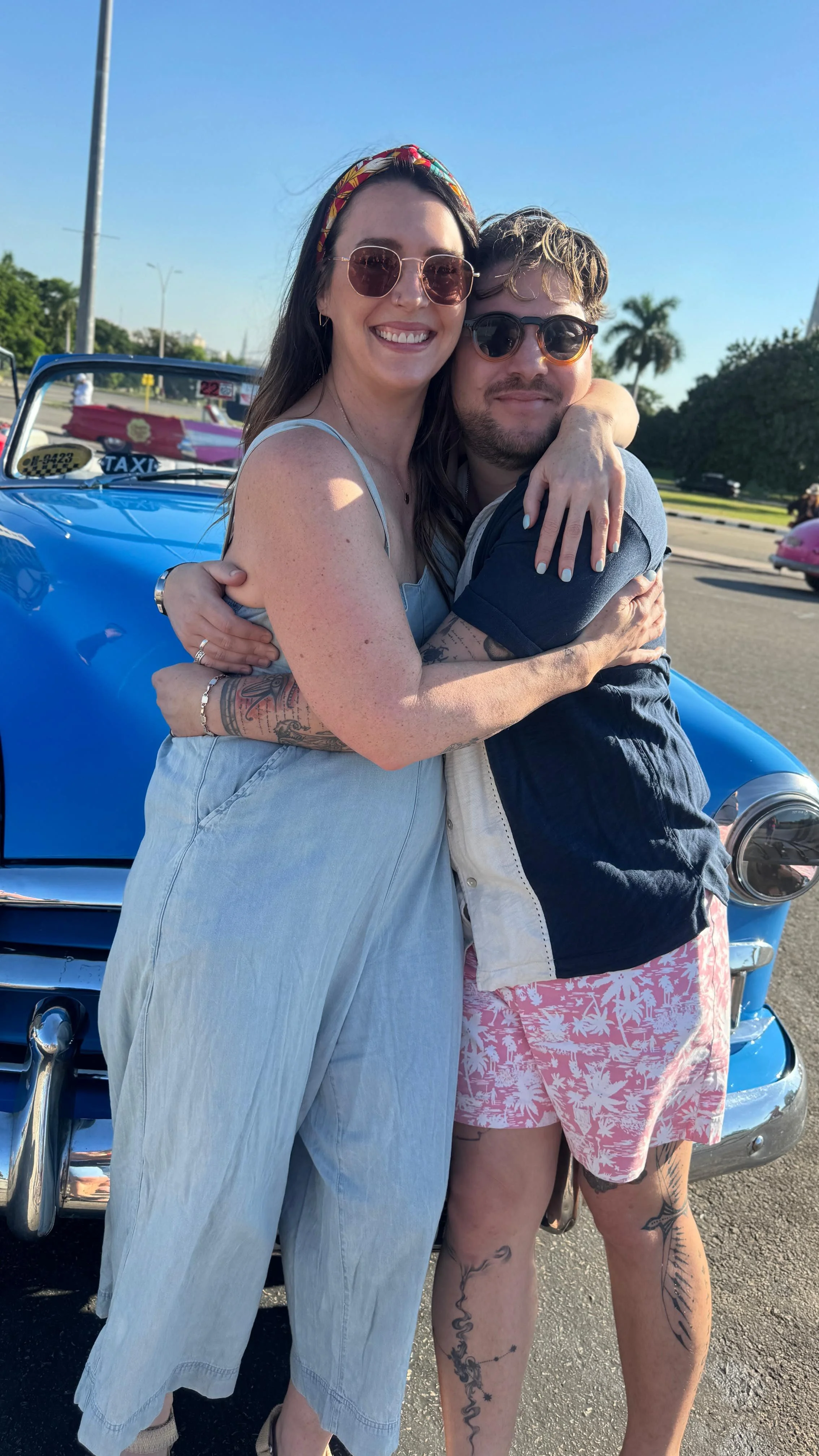
Andrés and I on my most recent trip to Cuba in January 2026.
Selling the House in the Dark
Before he could officially leave Cuba, Andrés had to sell his home—not an easy task on a normal day in Cuba, much less during the crisis. Buyers were coming through constantly, stress mounting, clock ticking. There was interest, but nobody would commit. Then one afternoon, a buyer knocked on his door, barely looked around, and said, "I want it."
Andrés didn’t hold his breath.
The next day, they went to the bank to finalize the sale. Mid-transaction, the power went out. Computers went dark. They waited three hours for electricity to come back, finished the paperwork, then bribed people at both the bank and the notary to push it through.
By the way, that part — the bribes, the under the table transactions, the black market exchanges on the side of a highway, the workarounds to get anything official done — is what many of us who are familiar with Cuba refer to as "Cuban shit."
Andrés went home with 2 hours to pack 16 years of his life.
He packed in the dark using rechargeable lamps, with no way to call a taxi because there was no fuel. He and his husband, Yunior, walked until they found a government bus driver willing to take them to a friend's apartment for cash. Seven bags up four flights of stairs. They left most of it there. Only two bags and two suitcases made the trip to Spain.
The Last Regular Flight Out
Their flight left Havana on a Sunday evening. The next morning, when they landed in Madrid, they read the news. Starting the next day, Cuba would no longer have enough fuel to sustain regular international flights. Airlines were canceling routes. Prices were skyrocketing.
They had taken one of the last flights out.
"We are so blessed," Andrés later told me.
What He Saw in His Final Days
In the two days before his departure, Havana had electricity around the clock — something so unusual that everyone noticed and commented on it. Andrés said it felt like the country was giving him a farewell gift.
The moment they got into the taxi to leave for the airport, the power went out again.
Andrés took it as a sign from the universe that his time to leave Cuba had officially come, and he was ready.
Since he's been gone, the reports from friends still on the island have been relentless and consistent. No transportation, empty streets where there used to be traffic, more power outages, and more uncertainty. ‘
"Total chaos," he said simply.
If you want to hear Andrés tell the story in his own words, his most recent episode of Type 2 Travel podcast is worth every minute. He not only talks about the state of Cuba as he left, but he also shares a much anticipated life update on his first week in Spain.
Is Cuba Open to Travelers Right Now?
Technically, yes...
Practically, it's a completely different story.
Flight access is unstable, infrastructure on the ground is severely strained, resources are depleting quickly, and locals are struggling more than ever. The 1950’s nostalgic Cuba travel experience that gets sold online — the one of shiny classic cars, Havana Club, and picturesque beaches — that hasn't been the real Cuba for decades, but right now it's more unrecognizable than ever.
After being there in January, I was hesitantly but tentatively planning to run one Cuba group trip again at the end of 2026. I really want to continue showing support to the Cuban people and to continue offering travelers what I feel is one of the most memorable, impactful travel experiences they can have in their lifetime.
But after everything that's unfolded in the past six weeks, I can't commit to that right now with integrity. I want to offer my travelers an experience I can somewhat predict and stand behind — and right now, I can't.
I want to be honest about my struggle with this decision. I’ve toiled over it for the past year as I’ve watched the situation in Cuba continue to deteriorate, and if you read my blog, listen to my podcast, read my emails, keep up with me on socials, or just know me personally, you probably know I’ve gone back and forth. Tourism dollars are a genuine lifeline for Cubans, including guides, restaurant owners, drivers, casa particular hosts, artisans, and small business owners. Pulling away business, even temporarily, isn't without consequence for the people I care about there.
But making concrete travel plans for an uncertain future as a U.S.-based tour operator doesn't just feel irresponsible — it's impossible. I'm ultimately responsible for the experience and safety of the people who travel with me, and the current situation doesn't allow anyone to plan ahead with any real confidence. There's no clean answer to this. It's heartbreaking, and it sucks.
All that being said, if I had plans right now to go to Cuba as an individual traveler (like I did back in March of 2020 as the pandemic hit), I'd book travel insurance, hope for the best, and go. I've always believed that countries need support most when they're in crisis, and pulling back tourism often makes things worse, not better.
My group was in Morocco during the 2023 earthquake. I would never choose to put anyone in that situation, but my decision to keep the trip going made it one of the most impactful group trips I've ever led.
If the only motivation in going to Cuba right now is purely about supporting the people on the ground, I'd say don't hesitate. I also get that there are real considerations: flight cancellations, logistical chaos, news headlines that make you question what to believe, and I know not everyone is willing or able to take that risk.
But if you can go and you're able to roll with the uncertainty, go. They need it. And Cuba has a way of sneaking into your heart in ways you can't predict, no matter what state it's in.
If you're newer to Cuba travel and want the full picture on what it's actually like, this post covers the basics.
What Andrés Predicts
I asked Andrés what he thinks will happen in Cuba over the next six to twelve months.
He said, "I honestly don’t know. I have no expectations, because the dictators have it all figured out, and they always get away with it."
Some people think things could shift by July. Others see no end in sight. What Andrés is clear about is that the only meaningful international voice calling for democratic change in Cuba has been the United States, while other regional governments, like Mexico, have continued sending aid and resources to Cuba under the banner of “solidarity” — support that flows directly to the government and leadership rather than to the Cuban people who desperately need it.
TLDR: it’s complicated, and nobody knows.
What's Next
I still have a Cuba group trip waitlist for anyone who wants to be notified if and when travel to Cuba does become viable again. No guarantees, no dates…but if things stabilize, I want to be ready, and I want to bring Andrés back to the island with us as our guide when that happens.
In the meantime, Andrés is in Spain. He's happy, and he’s safe. He's discovering tapas, fast internet, and streets that smell like bakeries for the first time in his life. I'm already thinking about a Spain 2027 group trip so those of you who know and love him can reunite (or meet him for the first time) and travel together on the other side of the window he spent years looking through.
Links are below if either trip is calling your name. 👇🏻
How to Support Andrés in His New Journey
I've set up a SpotFund to help Andrés and Yunior get a head start on their new life in Spain. Starting over from Cuba means arriving without credit, without a bank account, and without any experience navigating the digital world we all take for granted. While they wait on paperwork approval before they can legally work, every bit of support helps them land on their feet. If you feel moved to contribute or even just leave them an encouraging message, I know it would be appreciated.
If you'd rather support his work directly, Andrés is also a published author. His novel, Cosa Negra, is available on Amazon — it's in Spanish, but even if you can't read it, buying a copy is a tangible way to support him as he builds his new life.