
How to Become a Better Home Cook: Lessons from a Self-Taught Chef
Most people think you need culinary school to be a great cook. That you need fancy equipment, expensive ingredients, and some kind of natural-born talent that you either have or you don't.
Enter Hannan Zary.
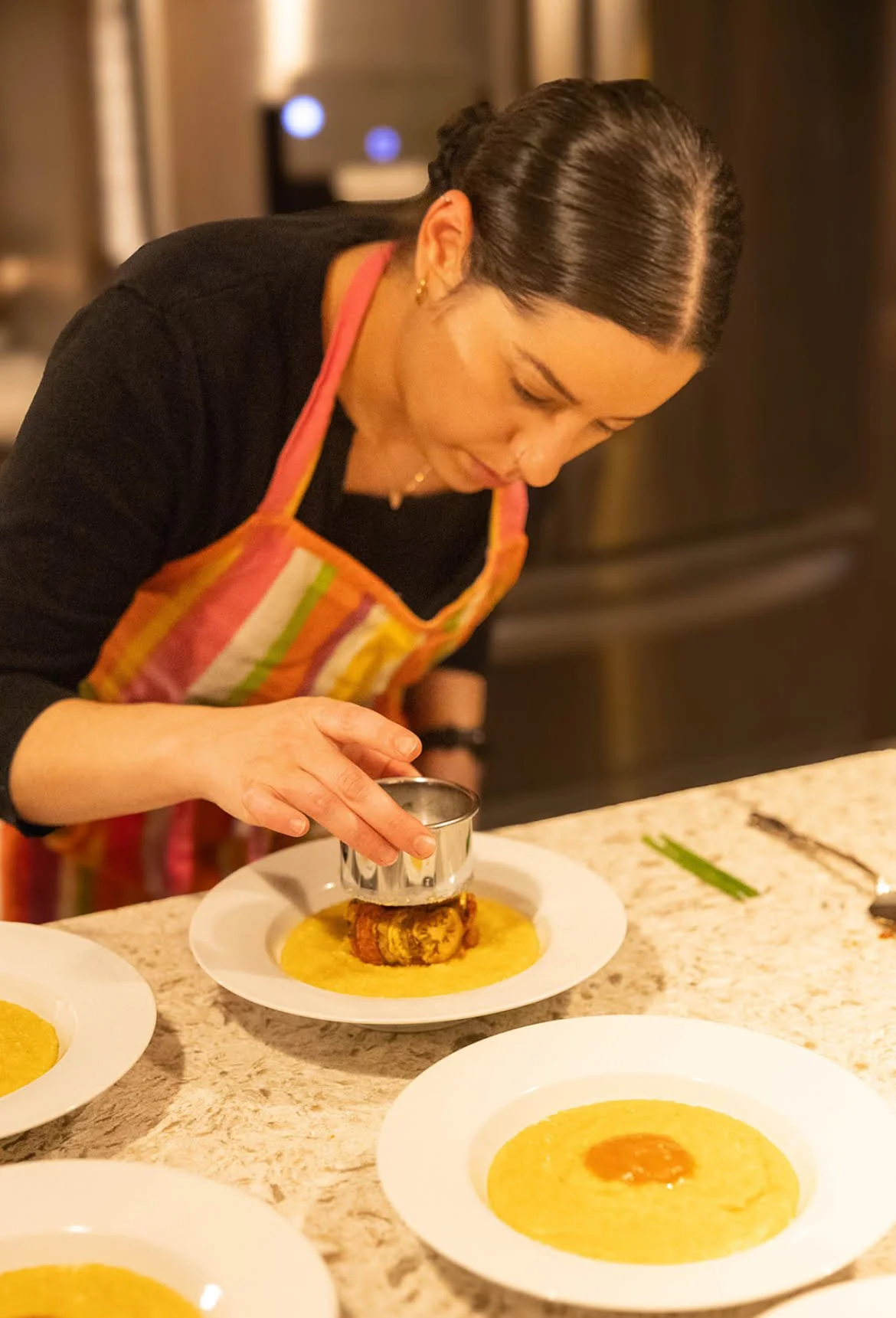
Hannan in her element.
Hannan is the chef behind Tamoont Dining + Gathering - the culinary wizard who cooked those mind-blowing meals at Camp Lola Whiskey that had everyone asking for seconds (and thirds). But here's the thing: she never went to culinary school. She taught herself to cook by obsessively watching the Food Network as a teenager and then strategically chose kitchen jobs where she could learn specific skills she didn't have yet.
If there’s one lesson to be learned from Hannan, it’s that you don't need formal education to become good at something. You don't need your parents' approval. You don't even need fancy equipment.
You just need to start.
The Unconventional Path to Becoming a Chef
Hannan's cooking journey didn't start with love - it started with spite.
Growing up between two cultures (her dad is Moroccan, her stepmom is Tunisian, and her mom is American), Hannan was surrounded by incredible food. Her stepmom constantly hosted diplomats and threw elaborate dinner parties with stunning platters and glassware that Hannan wasn't allowed to touch.
"I wasn't able to help her in the kitchen," Hannan told me. "My job was to be the server, the dishwasher, the cleanup person."
Every time young Hannan asked a question about cooking or tried to taste something, she'd get yelled at and told to get out of the kitchen. So she did what any stubborn kid would do: she decided to teach herself.
"I don't like to feel controlled and I don't like being told what to do. I think annoyance pushed me to be interested in doing my own research."
Spite, it turns out, is a very powerful motivator.
Learning to Cook on a Budget
At her mom's house, they didn't have money for cooking classes or fancy ingredients. They had basic cable and five channels, one of which played shows from the Food Network at certain times of day.
Hannan would watch whatever was on. Anthony Bourdain. Ina Garten. She couldn't pick and choose episodes - she just absorbed whatever happened to be on.
"I would have to learn based on what our budget was. I would make the food for dinner, but I couldn't go too crazy because there just wasn't enough funding for the ingredients."
When she wanted to make a recipe that called for wine, she'd have to ask her mom if they could afford a whole bottle just for a few tablespoons. Usually, the answer was no - so she'd figure out how to make it without the fancy ingredients.
Creating Your Own Culinary Education
When Hannan turned 18, she asked her dad to pay for culinary school. He said no. She could be a doctor, lawyer, or engineer - those were her three options. Cooking was "just a hobby" to him.
She intially enrolled in nursing school to please him. She lasted one month before dropping out and pursuing her dream of becoming a chef.
Instead of formal culinary school, Hannan chose her own education by strategically taking restaurant jobs where she could learn specific skills. She worked in bakeries, meat shops, and restaurants - always with one question in mind: What can I learn from these people that I don't know already?
"It was hands-on, and I was getting paid," she said.
She basically created her own paid apprenticeship program instead of having to pay for a degree.
What You Can Learn from Hannan's Journey
1. Start Where You Are
Hannan didn't have money for ingredients or cookbooks. She had five TV channels and a mom who said "you can do anything you want, but let's check how much it costs first."
She worked within those constraints and still became an incredible cook.
You don't need a kitchen remodel or fancy pots. You need to start cooking with what you have.
2. Learn by Doing
Hannan watched the Food Network religiously, but she didn't just watch - she practiced. Every episode was a chance to try something new, even if she had to modify the recipe based on her budget.
The learning happens when you actually get in the kitchen and do it.
3. Failure Is Part of the Process
"Failing is learning," Hannan told me. "I've had so many light bulb moments from failures."
Not everything you make will be perfect. That's the point. You often learn more from the disasters than the successes.
4. Taste as You Go
This might be the most important lesson Hannan shared. Don't wait until the end of cooking to taste your food.
"If you have a whole dish and you're making something for 20 people, taste as you go because you can't go back."
When you taste throughout the cooking process, you can adjust seasoning, add acidity, balance flavors.
5. Understand the Basics: Salt, Fat, Acid, Heat
These four elements are the foundation of any kitchen, and one of my favorite books on cooking:
Salt enhances flavor and brings out the natural taste of ingredients
Fat carries flavor and creates richness
Acid (like lemon juice or vinegar) brightens dishes and balances richness
Heat transforms ingredients through different cooking methods
If you understand how these elements work, you can cook almost anything - even without a recipe. I recommend Samin Nosrat’s book or watching the four-part Netflix series to learn these basics.
6. Find Ways to Practice That Work for Your Life
Hannan suggested volunteering at a community kitchen if you want hands-on experience without culinary school. You'll learn how a professional kitchen runs, pick up techniques, and help your community.
Other options:
Buy Meal kits that give you unique recipes, pre-portioned ingredients and teach you new techniques
Take a local cooking class to learn specific cuisines
Cook with friends who have different skill levels than you
Cook local dishes at home that you’ve had while traveling
Challenge yourself to try one new recipe every week
7. Choose Your Own Curriculum
Just like Hannan chose restaurant jobs based on what she wanted to learn, you can choose what types of cooking you want to focus on.
Want to master Thai food? Start working through a Thai cookbook. Want to learn knife skills? Watch YouTube videos and practice your cuts.
You don't have to be good at everything. Pick what interests you and go deep.
Practical Tips to Start Improving Today
1. Master a few basic techniques
How to properly sauté vegetables without steaming them
How to cook proteins to the right temperature
How to make a simple pan sauce
How to season food properly
2. Build your spice collection slowly
Start with the basics: salt, pepper, garlic powder, cumin, paprika, oregano. Add new spices as you need them for recipes, and pick up some local spices while traveling (Pro tip: India, Georgia, and Morocco have amazing spice markets).
3. Learn to improvise
Start with recipes, but don't be afraid to substitute ingredients based on what you have. Can't find shallots? Use onions. Don't have white wine? Use chicken broth with a splash of lemon juice. Google and ChatGPT are your friends.
4. Cook the same dish multiple times
Make it again. And again. Notice what you'd change. Adjust the seasoning. Try a different cooking method.
Repetition builds muscle memory and confidence.
5. Taste everything
This is Hannan's number one rule. Taste your food at every stage. You can't fix over-seasoned food after it's on the plate.
6. Don't be afraid to fail
Some meals will be disasters. Figure out what went wrong, and try again.
The Permission You're Waiting For
You don't need anyone's permission to become good at something.
You don't need culinary school. You don't need a professional kitchen with fancy equipment. You don't need to be naturally talented.
You just need to start. And keep going. And learn from the failures. And taste as you go.
Hannan learned to cook out of spite, on a budget, with limited resources. And now she's creating incredible dining experiences that bring people together.
If she can do that, you can definitely learn to make a decent dinner.
So stop waiting for the perfect moment or the perfect kitchen or the perfect ingredients.
Start where you are. Use what you have. Learn as you go.
And for the love of god, taste your food before you serve it.
Want to hear the full conversation with Hannan? [Listen to the episode here] where we dive into her journey from Food Network obsession to professional chef, why Americans need to slow down, and how food creates genuine connection.
Want to experience Hannan's cooking firsthand? Check out upcoming Tamoont Dining events in Eau Claire, Wisconsin at tamoontdining.com or follow along on Instagram @tamoontgathering.