
What Travelers Really Think About Cuba (Spoiler: It's Not What You'd Expect)
I recently wrapped up a "connect call" with some of the women who joined us in Cuba this January, and I'm still processing everything they shared. These calls have become one of my favorite parts of leading trips—getting to hear how the experience actually landed for people after they've had time to sit with it.
We spent over an hour talking about everything from the emotional weight of witnessing Cuba's reality to the unexpected joy of drinking rum on a Havana rooftop at 2am.
And what struck me most was how raw and honest everyone was about the hard parts alongside the magical ones.
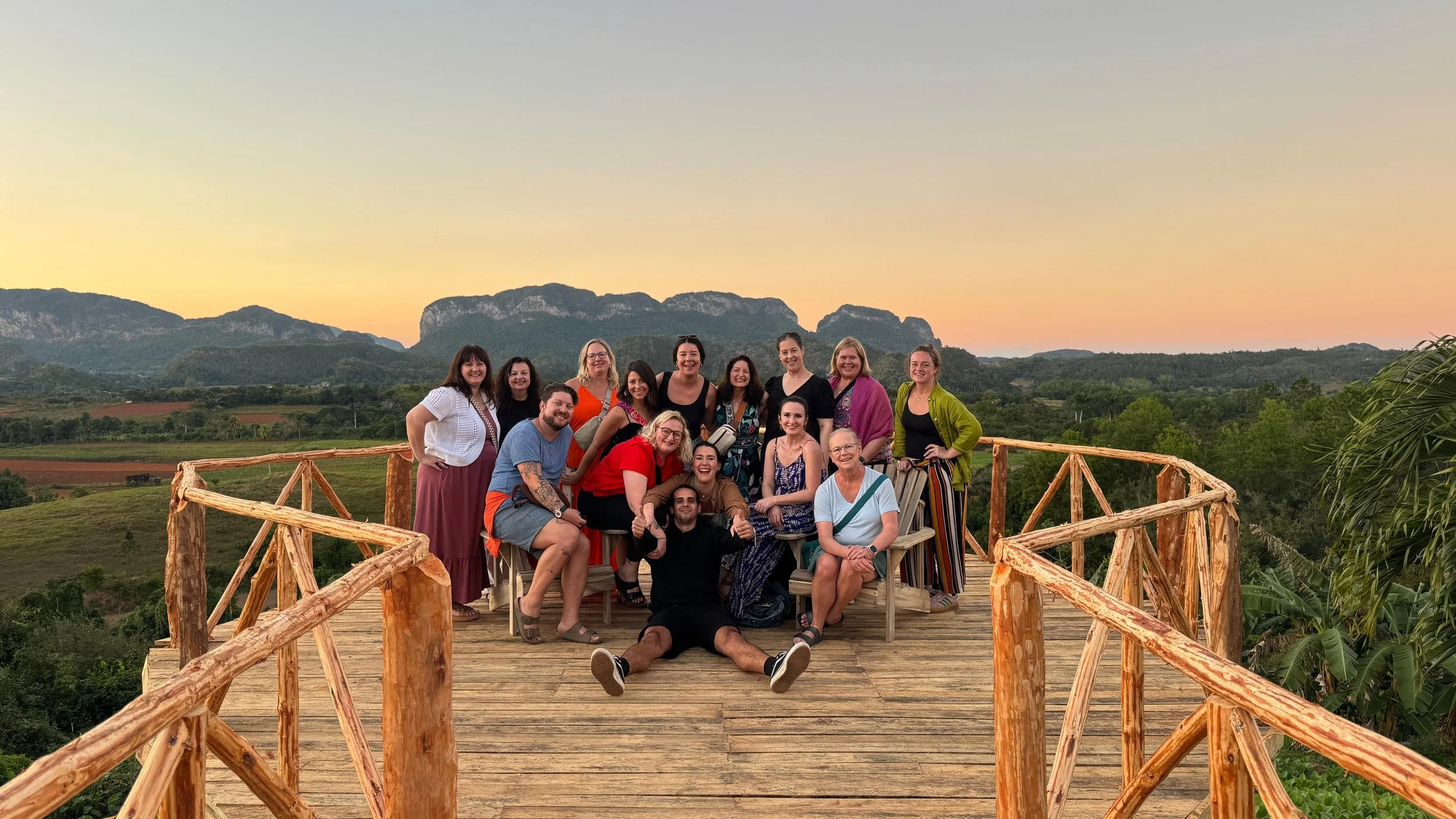
The group in Viñales.
The Stuff That Stays With You
One woman from our group said something that really resonated me because I hear it often:
"I left part of my heart in Cuba."
She wasn't being dramatic—she meant it. The experience of being there, of seeing how resilient and joyful Cubans are despite everything they're dealing with—it does something to you.
Several people talked about how challenging it was to witness the poverty and struggle, especially the elderly folks and young children. One traveler mentioned breaking down when we visited the home where we donated supplies—seeing what people actually need versus what we take for granted back home.
But here's what I loved about our conversation: nobody regretted going. Nobody wished they'd stayed home where it's comfortable. They all said it made them better people.
The emotional heaviness was real, but so was the transformation. Multiple women said they came home different—more grateful, less wasteful, more aware of their privilege. One person has completely changed how she lives her daily life because of what she saw in Cuba.
The Cuba Effect on Your Perspective
I always tell people Cuba is one of those trips that will mess you up in the best possible way. And hearing these women talk about it confirmed that. One shared how she's stopped complaining about minor inconveniences because she keeps thinking about Cubans who are dealing with actual hardships—not just "first world problems" but real, daily struggles for basic necessities.
Another talked about how the trip shifted her understanding of happiness. Cubans have so little materially, and yet they're some of the most joyful, generous people you'll meet. That contrast hits you differently when you experience it firsthand versus just reading about it.
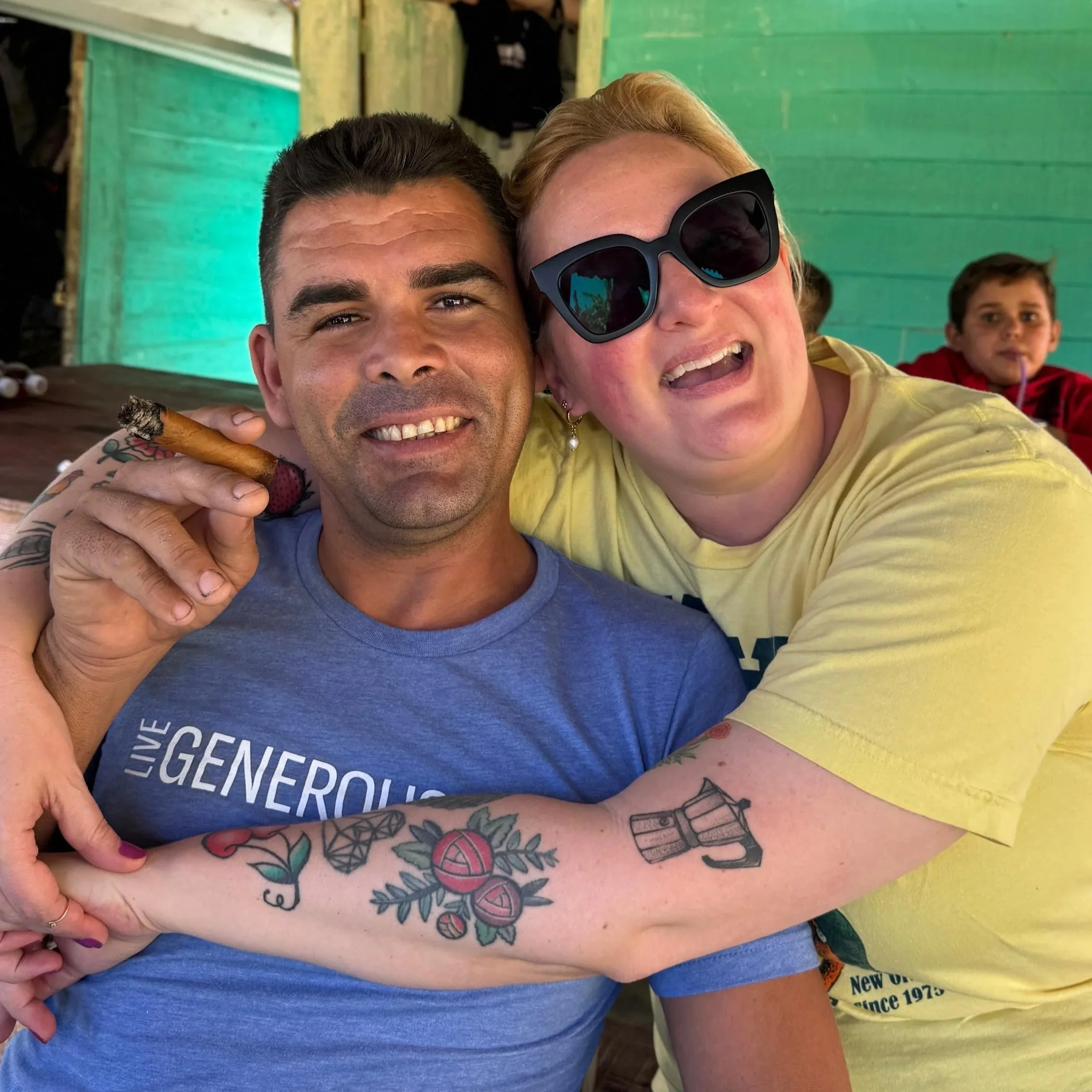
Sharing a cigar on the tobacco farm in Viñales.
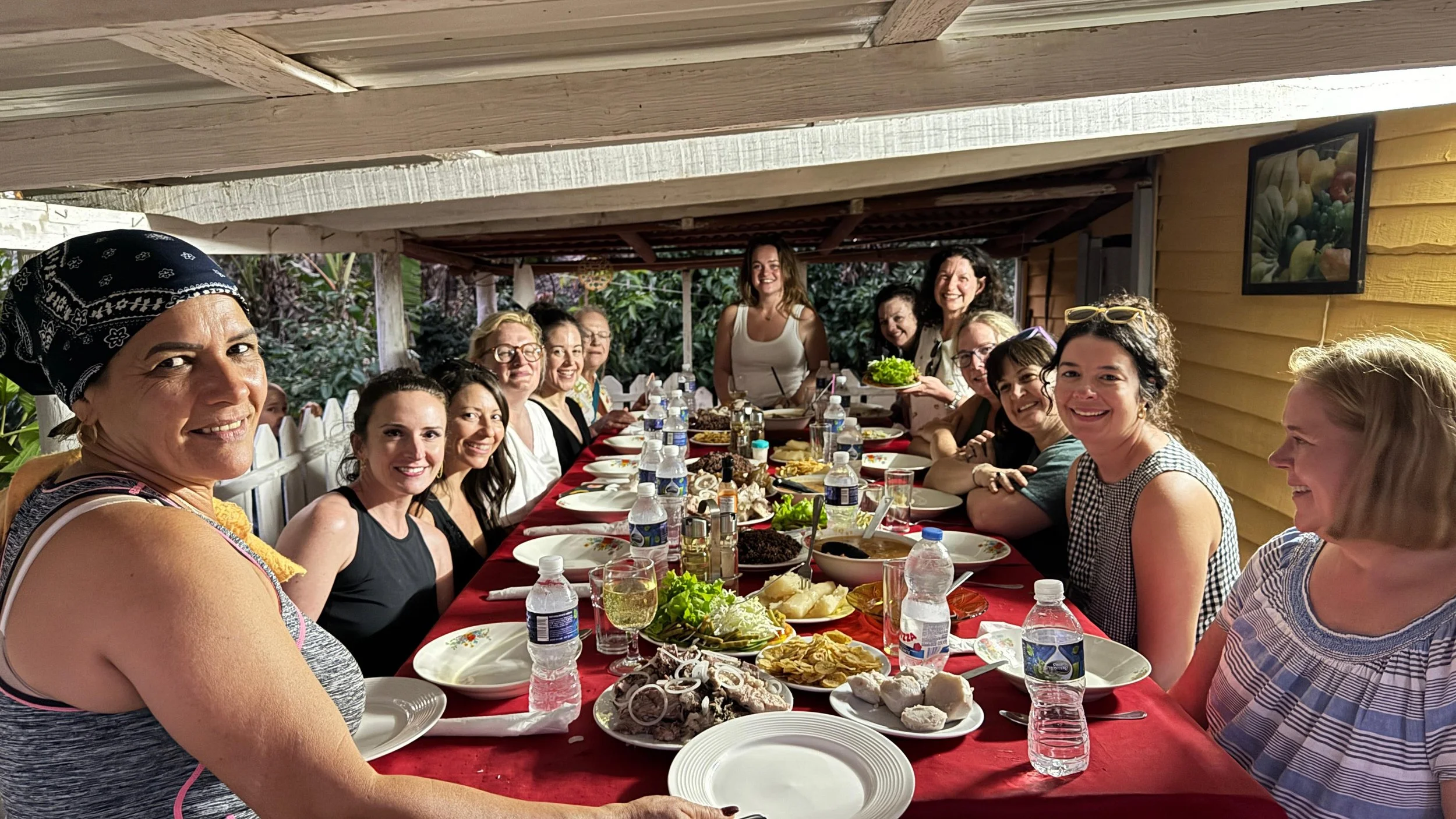
Group dinner at a family farm in Viñales.
The Group Experience
What really made me smile during this call was hearing how many genuine friendships formed. These women showed up as strangers, and now they're planning meetups and future trips together, staying in regular contact, and talking like old friends.
One traveler said she was nervous about the group dynamic beforehand—worried about fitting in or connecting with people. But she ended up having some of the best conversations of her life with women she'd never met before the trip. There's something about shared experiences—especially intense ones—that bonds people faster than years of casual friendship.
Multiple people mentioned how much they valued the mix of ages and life experiences in the group. The perspectives ranged widely, but everyone brought something valuable to the table. And apparently, the late-night balcony cocktail sessions didn't hurt either.
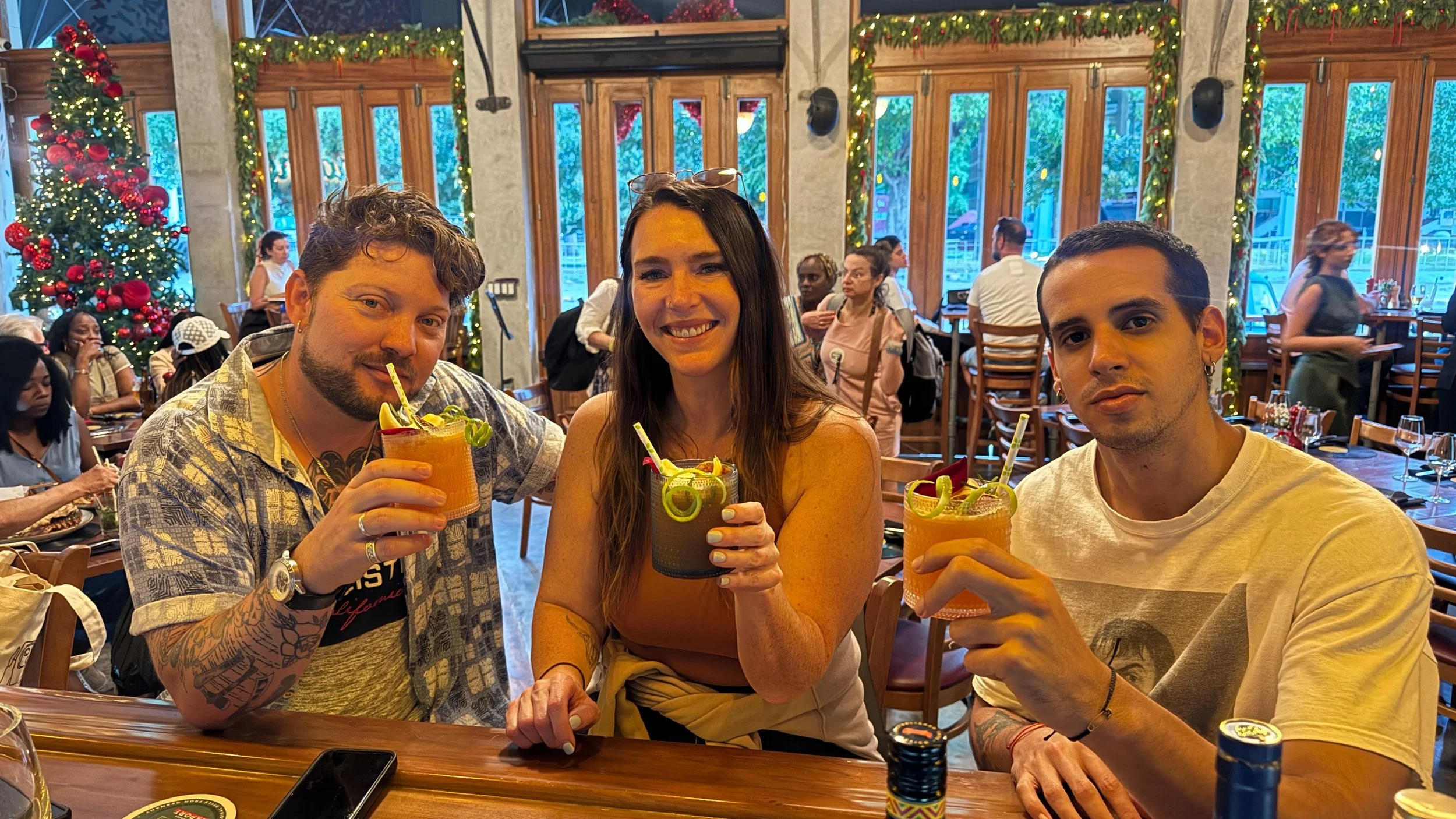
Enjoying a cocktail in Havana
What They'd Tell First-Timers
I asked what advice they'd give someone considering Cuba, and the responses were pretty consistent:
Just go. Stop overthinking it. Yes, it's hard. Yes, you'll be uncomfortable. Yes, you might cry. But you'll also laugh your ass off, make incredible friends, and come home with a completely shifted worldview.
Bring more than you think you need for donations. Even if your suitcase is already stuffed, find room for more supplies. The need is real, and seeing the impact firsthand makes the extra luggage fee completely worth it.
Prepare yourself emotionally. This isn't a beach vacation where you come home relaxed. You'll come home changed. And that's exactly the point.
Trust the process. Even when you're exhausted, even when you're emotionally overwhelmed, even when you're wondering what the hell you signed up for—it all comes together in the end.
The Part That Made Me Emotional
Toward the end of our call, multiple women thanked me for creating these experiences. But here's what I want them to know: I'm just the one who puts the pieces together, and it takes a whole team who support me behind the scenes. They're the ones who show up, who open themselves to discomfort, who cry alongside each other, who form these bonds, who do the hard emotional work of sitting with inequality and injustice without looking away.
One woman said that before Cuba, she'd never really understood what transformational travel meant. Now she gets it. And honestly, that's why I do this work. Not to check countries off a list or collect passport stamps, but to create space for people to be fundamentally changed by what they experience.
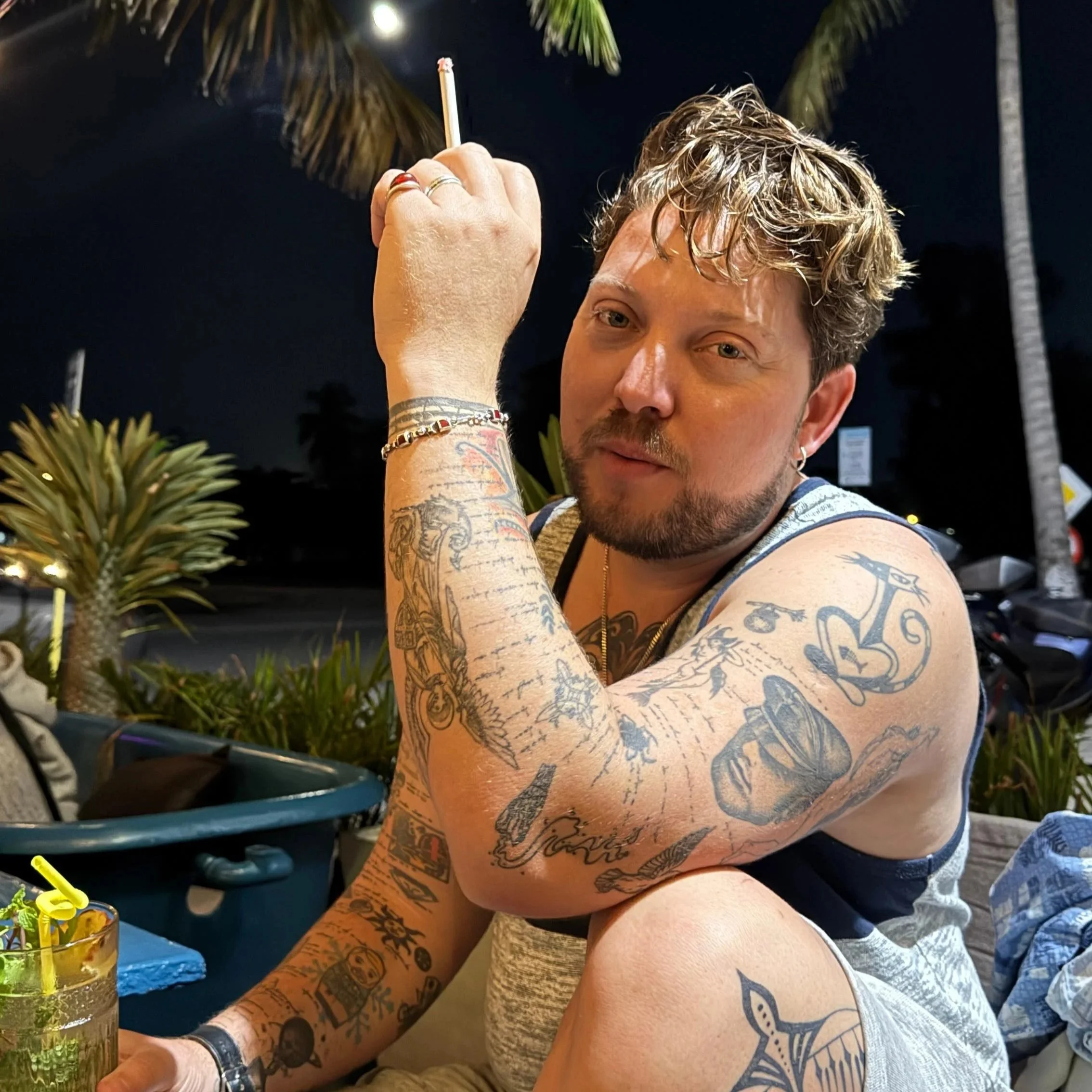
Andrés—one of our beloved Cuban guides.
So Here's the Thing About Cuba
It's not easy. It's not always fun in the moment. You will be hot, tired, and probably emotionally exhausted at some point. You'll see things that break your heart and make you question everything about how the world works.
But you'll also drink rum on Havana rooftops with people who started as strangers and became lifelong friends. You'll dance in the streets of Viñales with a Cuban cowboy. You'll have conversations that shift your entire perspective. You'll witness resilience and joy in the face of struggle that will stay with you forever.
And when you get home, you'll realize that the discomfort was the whole point. Because that's where the transformation lives—not in the easy parts, but in the parts that challenge you to see differently, feel differently, live differently.
We've tentatively got another Cuba trip coming up next December for New Years, depending on how things change over the next few months. If any of this resonates with you, maybe it's a sign that it's time to stop thinking about it, stop waiting for other people, and actually book the damn trip.
Your future self—the one who went, who was uncomfortable, who came home changed—will thank you.